Tim Neeves, Director of Prospect Arts and Director of the Film 58 challenges us to become God´s instruments, live Isaiah 58 and be a hand of healing to a hurting world! Enjoy this interview and Live58!

Cecy's Blog
Tim Neeves, Director of Prospect Arts and Director of the Film 58 challenges us to become God´s instruments, live Isaiah 58 and be a hand of healing to a hurting world! Enjoy this interview and Live58!
“Perseverance is a key for Christian living, perseverance in spite of difficult struggles in life, perseverance in faith and perseverance in the promises of the Lord.”
Tania Mendes
Tania Mara Alves Pereira Mendes. She was born in São Paulo, Brazil. She has been married for 30 years but is thankful to God for what seems a short time because the marriage has been so good. Her husband, Wlademir, is an obstretician/gynecologist. Their son, Tiago Rafael, is another blessing from God. He’s a chemistry researcher and is married to an American girl, Danielle, who is an event manager and yet another blessing in their lives.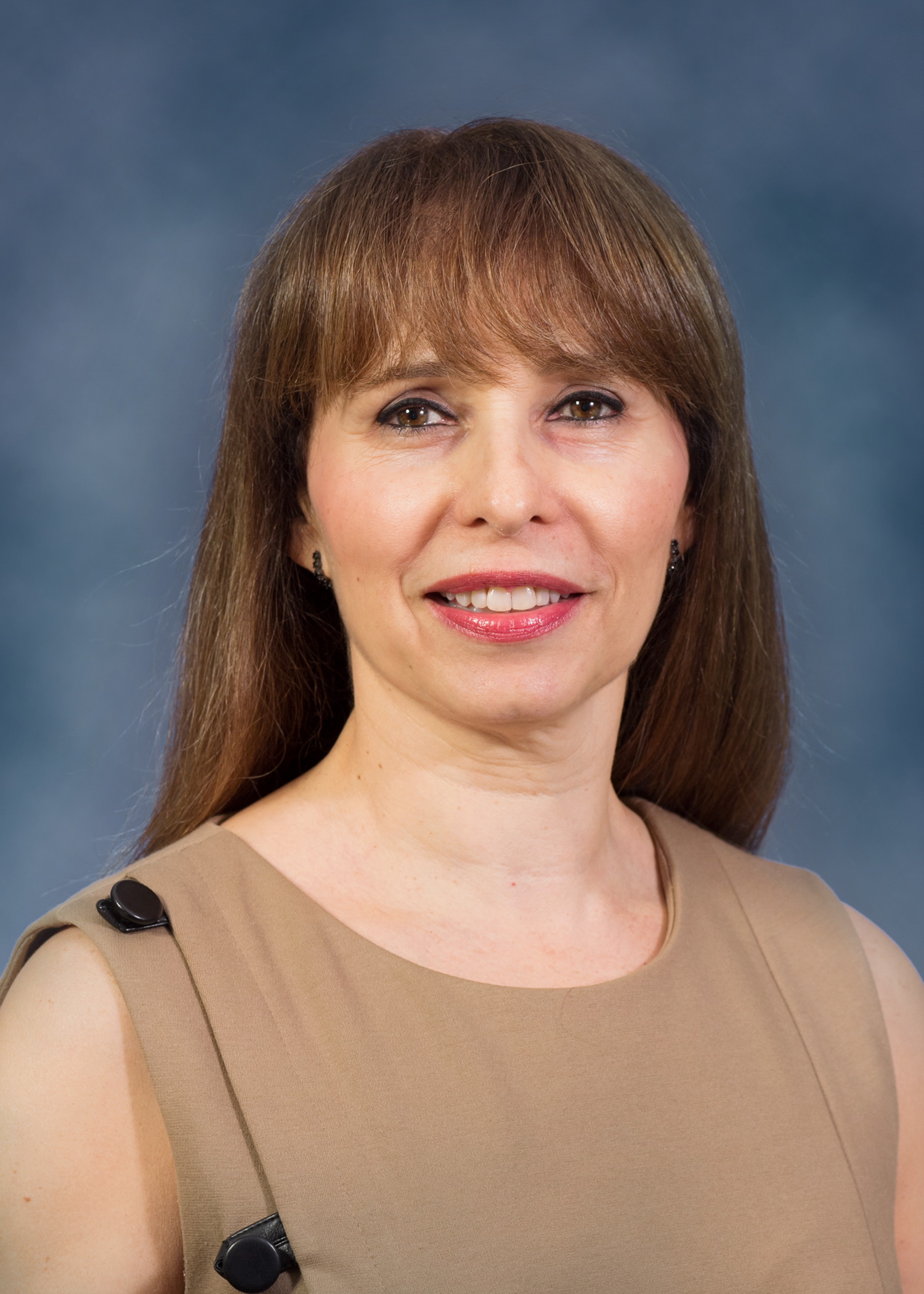
Tania has a graduate degrees in Theology and Journalism as well as a post-graduate degree in scientific journalism. She is planning to start work on a master’s degree program in communication soon. She has been working for Compassion Brazil for 10 years as a Program Communications Manager and says it has been a privilege to work for God using her professional skills. She has seen many children living below the poverty line who have a new perspective on life and can hope for a better future because they have been transformed by the power of the Gospel of Jesus Christ.
Tania attends a Baptist church in Campinas, a large city an hour and a half from São Paulo, the state capital. Some of the subjects she has taught in Sunday School are New Testament, Proverbs and Biblical Geography. She has also given talks on communication between couples in other churches in other cities.
Tania, you recently returned to your country after a Haggai Seminar. Tell us how this Advanced Leadership Seminar impacted your personal and professional life. And what are your challenges now?
I came back from Chiang Mai, Thailand, in July 2014. I attended a 25-day intensive course on Advanced Leadership there. It was a blessing –a gift from God. Actually, I had waited for about 10 years to be able to attend this course. It was a long wait, but well worth it. I even had to postpone it 3 times because of conflicting schedules. However, I’m sure that God had His proper time and I had the opportunity to go two months ago. I was able to see God acting in my life and in the lives of the 55 women from 22 different countries who attended. This kind of gathering left me with a wonderful feeling, and I understood better how wonderful it will be in Heaven with God and His people from every nation and tribe. There are no words to describe this! It’s really amazing to see people who come from different countries and cultures but who have the same God, the same Savior and the same Holy Spirit! Only God can put all of us together and unite us in spite of our differences.
The Haggai Seminar made an impact on me personally, making me more sensitive and aware of the need to pray more. I need to pray more and Christians need to pray more. There’s a lot of work to be accomplished and we need God’s grace to fulfill the mission. We need His grace and favor to be able to go out and preach the Gospel with the power of the Holy Spirit –to preach a relevant, contextualized message without ever changing its essence.
With regard to my professional life, God reinforced my idea of doing everything with excellence because He is perfection. I know that I am not, but I can improve and can always count on Him to help me. He has given me gifts, so I need to use them and do my best to glorify Him and bring others to His feet. The key word is excellence. Than means doing everything with that in mind!
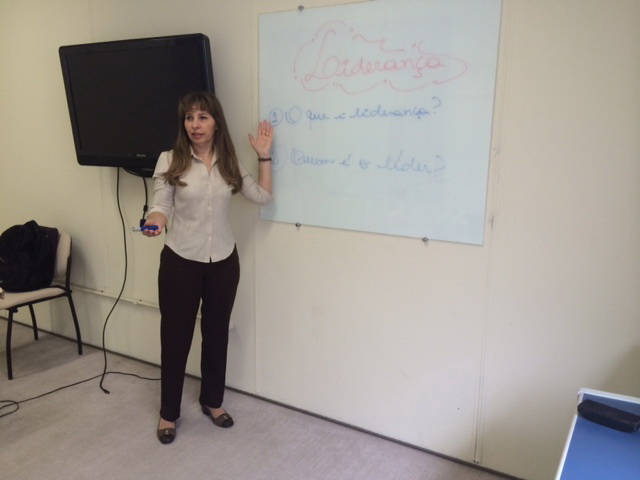
Tania Mendes, Journalist & Bible Teacher
Lord willing, I’ll give a course for leaders in my church next year. My pastor supports this idea. I want to share with these people the importnce of being a leader who is committed to God and His mission of preaching the Gospel wherever they are and making a difference in their community. We’re preparing material for at least 10 meetings which will be scheduled on Saturdays or Sundays in March and May.
As a Christian journalist, perhaps one of those challenges is also “spreading the Gospel through media successfully.” Along that line of thought, what would you recommend to your collegues around the world so the message of the Gospel may be more effectively divulged through the media and the social networks?
First of all, it’s good to remember that the core values of the Gospel are not negotiable and that we’re committed to a Holy God who never changes. This idea needs to be very clear to every Christian, no matter what his or her profession is. I think people know that the media and social networks are powerful tools. So people who want to use these tools need to be good examples of Christianity by “living the extraordinary in an ordinary way.” This means being very connected to God and understanding and doing his will in a practical way daily. I truly believe that only God has the power of changing a person by giving him not only eternal life, but also a purposeful life on Earth. Heaven starts here when a person receives Jesus as Savior and Lord and begins to care about others and share the “good news” of salvation. People are definitely watching us as we make both big and small decisions, and many times our actions have the power to speak louder than our words.
The media and the social networks are good tools for spreading the Gospel, but we really need to use them wisely. We need to be faithful to the Word of God and be careful in the way we speak and live.
Tania, you have embraced the Christian faith for 36 years. You have probably experienced many “ups and downs” during all these years -many joyful moments, but also many distasteful and even heartbreaking ones. What has kept you faithful to Christianity? Is there true hope in this faith?
Thanks to God, I haven’t experienced “ups and downs” during these years. I certainly have experienced heartbreak. However, I’ve held one Bible verse very close to my heart. It’s Hebrews 12:2 and it says, “Let us fix our eyes on Jesus, the author and the finisher of our faith.” If you do that in spite of people or circumstances in life that can harm you, you can be sure there is hope, because Jesus will never disappoint you and He always fulfills His promises.
Romans 5:8 says that “God has shown us how much He loves us: it was while we were still sinners that Christ died for us!” The Bible tells us that God is perfect and holy, and it also tells us that humans are sinners and selfish. We have hope because God is good and loves and forgives us, and He draws us close to Him through Jesus Christ, our Lord and Savior.
And now, your final message to anyone who might be reading this interview, especially to women who may be facing serious struggles and have lost all hope in life.
Dear readers -and especially dear women: Keep looking to Jesus. He loves you so much and has promised to be with you until the end. Also remember that our help comes from the Lord (Psalm 121, and as the Apostle Paul says, take the armor of God and remain steadfast! (Ephesians 6:13) Remember that Romans 8:28-39 says that nothing in all creation will be able to separate us from the love of God in Christ Jesus our Lord. We are children of God and each one of us is very special to Him!
So to conclude, let me close with a personal testimony. I was almost 18 when I received Jesus as my Savior and Lord. I grew up in a Catholic church and I used to be very sincere in my faith, but I really didn’t understand that I needed to recognize Jesus as my personal Savior and Lord. It was not easy for me to deal with this reality, I fought it, but God had His plans.
I also had to deal with conflicts at home. My father even made me leave home four times after he found out I had made this decision of faith, because he couldn’t understand that I had received Jesus because I was a sinner and I needed to do that. For him, a sinner was only a person who stole or killed, a criminal. He refused to speak to me for 4 years. Those were very difficult times, but I prayed and asked God to help me.
God made it possible for me to stay at home until I got married, and now my father has started reading the Bible and attending church. Only God knows his heart. I praise the Lord because He has shown me His mercy as He says in His Word (Lamentations 3.23) and He has also strengthened me (Isaiah 40.31).
So perseverance is a key for Christian living, perseverance in spite of difficult struggles in life, perseverance in faith and perseverance in the promises of the Lord. And all you need is to learn His Holy Word and meditate on it daily!
“I feel sorry for anybody who’s trying to make a mark and doesn’t know the Lord [Jesus]…Who is changing lives today? Is Buddha? No. Is Krishna? No. Is Mohammed? No. I’m talking about transforming lives to give them joy.”
John Edmund Haggai
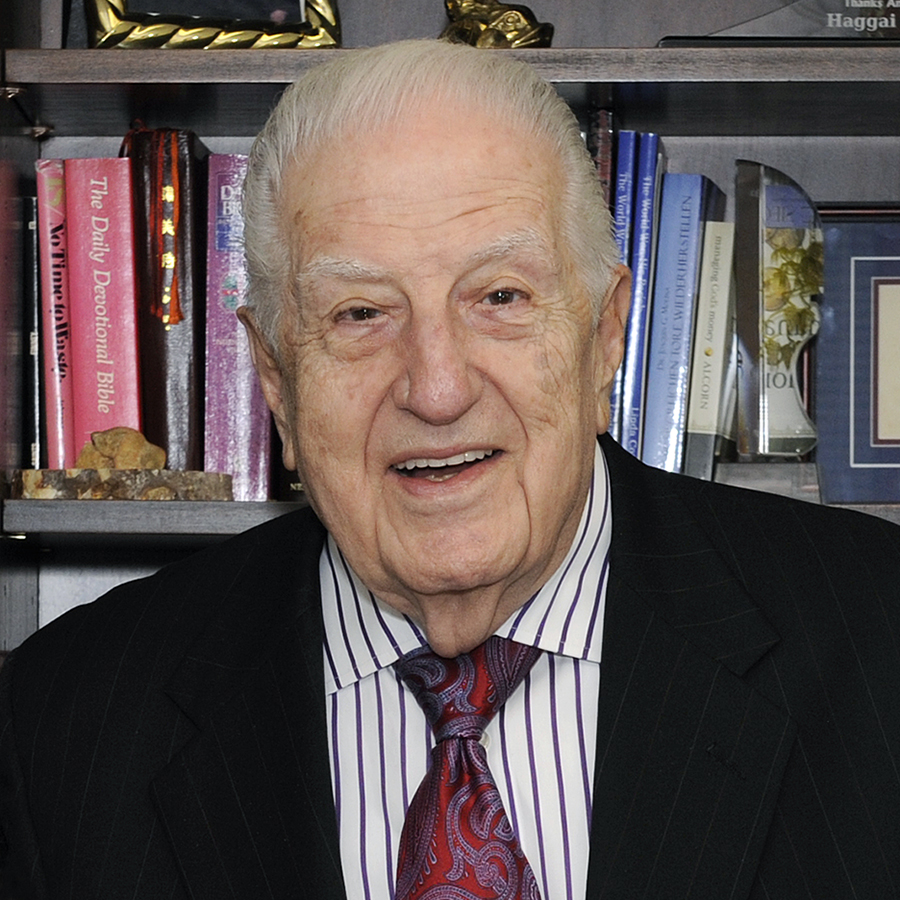
Dr. John Edmund Haggai
The founder and chairman of Haggai Institute for Advanced Leadership is truly a Christian world statesman. In more than 70 years of public service, he has pastored four churches, held evangelistic campaigns around the world and has established an advanced leadership program with over 93,500 alumni in 186 countries. A graduate of Moody Bible Institute and Furman University, Dr. Haggai has also received honorary doctorates on both sides of the Pacific. In spite of an intensive travel schedule — including more than 100 round-the-world trips and scores of intercontinental trips — he is a prolific author. His first book, How to Win Over Worry, has sold millions of copies in 19 languages.
Unfortunately, our world is surrounded by hopelessness. Could you briefly share with us an event in your life when you lost all hope and maybe even doubted if God was able to help? What did you learn from this experience?
Well, I’ll sound like a goody-two-shoes, but I really can’t remember a time in my life when I was without hope. I did have an experience when I was in Chicago as a student. I was born into a Christian family. I wondered what I’d be if I had been born in a Buddhist family or a Hindu family or an atheist family, so I started studying, and it didn’t take me long. I went to the Newberry Library in Chicago and started doing some studying when I was a student at Moody. I didn’t tell anybody, but it didn’t take a week for me to find out that the resurrection of Jesus Christ was a pivotal point, and that settled it for me. No other religion has anything like that. Buddha is dead, Krishna is dead; they’re all dead. Jesus is alive! And He’s still changing lives. They’re not changing lives. So that was the only time. It lasted maybe a week.
How can leaders revitalize a God-given vision when they have probably been praying for a long time and the vision seems not to be becoming real?
I’ve always taken very serious steps. First of all, write out the vision in detail. The Lord told Habakkuk, “Write the vision and make it plain” (Habbakuk 2:2).
Write it in detail. I find that for most people, it’s not a vision, it’s a wish, and it’s amorphous. It’s not detailed.
What is the vision? Why do you think it honors the Lord? Write that out.
Why would anybody be opposed to it? Write that out. And how will you deal with those who are in opposition to it? Write that out.
I’m a strong believer in writing. A French philosopher said, “How do I know what I think until I read what I wrote?” So writing clarifies your thinking. Francis Bacon said, “Writing makes an exact man.” So, write it out.
And then, what steps are you going to take? If you drive from here [Atlanta] to New York City, you’re not going to do it in one hour. You’re not going to say, “That’s a fine looking road, I think I’ll go that way.” No. What are the steps, the action steps?
Write specific goals with rock-solid action steps.
For me to do what we did here as a ministry, everybody was opposed to it, because nobody had ever done it. Nobody had ever done this. My denomination was opposed to it. Some of the most famous evangelists were opposed to it — good men, godly men. The head of the National Association of Evangelicals (he’s now with the Lord, a dear friend of my family, a fellow pastor of my father in Massachusetts) went around the world saying, “Young Haggai is setting missions back 50 years.”
So don’t be arrogant, but don’t be timid — and smile.
What I would do was say, “Do you understand what the vision is? Tell me. Tell me what it is.” Well, they couldn’t do it. I’d say, “How can you be opposed to something you don’t even understand?”
And then you have to go over it every single day.
I can show how I have everything written out, and I go over it. You have to go over it repeatedly. If a man marries a woman and never tells her he loves her, their marriage is in trouble after a short period of time. The guy says, “You know I love you.” No, he’s supposed to tell her that.
So on this vision matter, if it seems that it’s not working, what steps have you taken? If you have a vision to build a great congregation and you don’t even have a church, well what steps have you taken? Why don’t you get some folks into a Bible study? Dr. Johnny Hunt started with just a handful of people and now he has 7,000, but that didn’t just happen. He had a vision, but he put legs to the vision.
So you’ve got to take action every day, and if a person’s taking action every day, he won’t get discouraged. That’s my view. Of course, I have no time for discouragement. Discourage means absence of courage, “dis-courage.” I have two secretaries working for me for years who came to me and asked, “Are you ever down?” I said, “Have you ever seen me down?” They said, “No.” I said, “Down is for losers.” Of course, I’m not down. Why should I be down? God is my Father. The Lord Jesus is my Savior, the Holy Spirit is my abiding Comforter, Heaven is my home. Why should I be down? It doesn’t even make sense. So that is the way I move ahead. If a vision’s not coming about, my thought is what are you doing to bring it about?
Haggai Institute is celebrating 45 years of ministry, training leaders from all over the world and you yourself are celebrating 90 years of age. Although it might be almost impossible, can you summarize or define all these years? What has been your greatest satisfaction as the founder of this ministry?
Well, the greatest satisfaction has been for the people who have been through the training to go back and have such an amazing response. For instance, one of our alumni is Eddie Villanueva in Manila. He has preached to as many as a million people on a weekend. Well, that is satisfaction. We’ve had some who’ve founded hospitals, some who’ve started churches — all that is satisfaction.
I don’t know if I can pinpoint one particular one. Every time I go overseas and see what they’re doing, it’s so far bigger than anything I’d ever dreamed. I could not have imagined it. I think that’s the biggest satisfaction, seeing what they’re accomplishing.
You just mentioned one or two examples, but could you think of a person doing the work the Lord has been allowing that person to do who has really touched your heart, that has even made you weep because of the transformation that is coming to any nation or any land?
I don’t know that I can point to one. My emotions run deep. I wish I could weep. I don’t weep outwardly; I weep inwardly. Of course, what’s going on in China — we have alumni in every province, including Tibet. Now that really moves me. Some of them have huge churches, much larger than many of the churches that we have here.
Or what’s going on in Indonesia. I just had an e-mail. Money is always a challenge since you have to be very quiet. The reason we have to be quiet is that it could endanger some of our alumni in the terrorist nations where there are suicide bombers and everything else, and so we keep quiet for their sake. Well, to raise millions of dollars for a secret is pretty much a challenge, but I got an e-mail recently from a man in Indonesia and he said, “In honor of your 90th birthday, I’m sending you US$500,000.” Well, that brought tears to my heart. Why the Lord touched him at this time, I don’t know.
Most probably, some readers of the Towards Excellence Blog who are not necessarily committed to the Christian faith will be reading this interview. What would you like to say to them? What do they need in order to live life to the full, to live a truly successful life?
The question is, “What components of your life today that you have carried out for whatever years the Lord gives you — 20, 30, 40, 50 — will make you happy at the end?” And you can say, “Well, that was something I’m very grateful for. I’m glad that my children are going to be the beneficiaries of this.” If you can’t point to something like that, there’s something radically wrong.
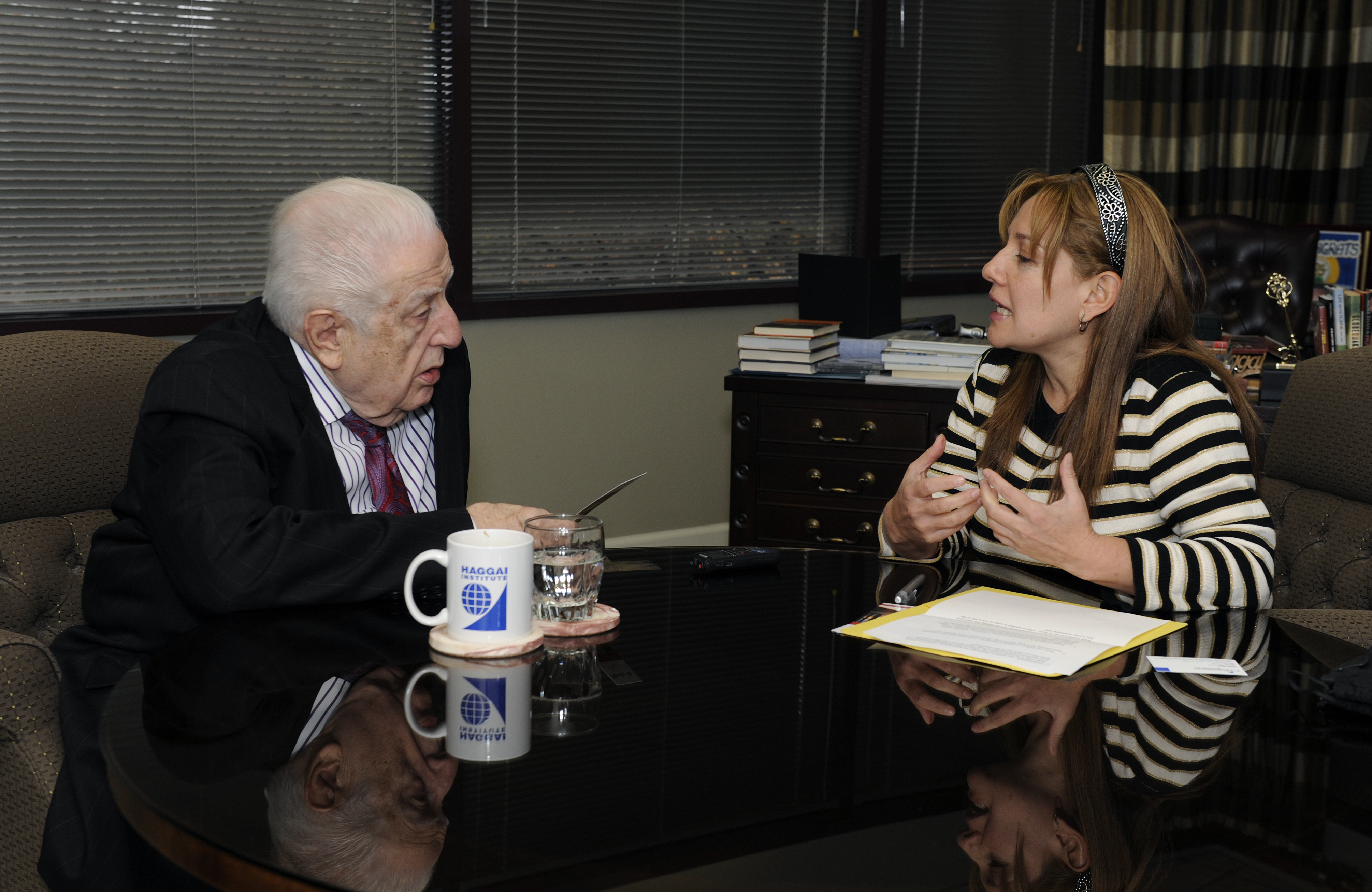
Cecilia Yepez during the interview with Dr. John E. Haggai
Have you ever heard of “Pascal’s Wager”? Blaise Pascal, the 17th century mathematician and philosopher, said either there’s a God or there isn’t. If you assume that there is not a God, then of course, you have no hope at all. If you assume there is a God, you have everything to gain, and even if there isn’t, you’ve not lost anything. That’s roughly stated. Anybody can Google “Pascal’s Wager.” It’s really quite good.
I feel sorry for anybody who’s trying to make a mark and doesn’t know the Lord. I’m not talking about being a Baptist or a Presbyterian or a particular denomination. I’m talking about a personal relationship with Jesus, the Person. How anyone can study His life and deny that He was different than any other leader, I do not know.
Who is changing lives today? Is Buddha? No. Is Krishna? No. Is Mohammed? No. I’m talking about transforming lives to give them joy. A lot of these folks are very vigorous or they’ll take vigorous action, but they don’t give evidence of having really great joy in their families.
So I would say to just study, read up on this and find out why some of the great leaders found it entirely consistent to be children of God. Ask why John D. Rockefeller was a child of God. Ask why Dr. Howard Kelly of Johns Hopkins found it consistent to be a scientist, medical doctor and a follower of Jesus Christ. Ask why Dr. William Lyon Phelps of Yale said if he had to choose between a college education and a knowledge of the Bible, he would say a knowledge of the Bible. Why did he say that? And then come to your own conclusions.
What has made you happy then?
The knowledge that I am His and that I have all the resources I need for whatever comes. We had a son who was brutalized by a drunken doctor. The veteran nurse supervisor said, “I’ll put my 23 years on the line and testify, if you want to sue him.”
I said, “No, I’m not litigious. Why do I want to sue him? I’m sure he’s shaken.” It’s the biggest mistake I’ve ever made. I’ll tell you why. There were six repetitions of that, and he finally murdered his wife, murdered the doctor who was taking action to bar him from practice and then he committed suicide. All of that would have been spared if I had taken action, but I don’t believe in sawing sawdust or crying over spilt milk. God knows my heart and that was it.
To see Johnny spastic — he could not walk or talk, but he had a brilliant mind… Dr. Eugene Spitz of the University of Pennsylvania Medical School said he had no doubt that if he could speak and we gave him a normal IQ test, he would have an IQ over 170. But you just say, “Even so, Father, for so it seemed good in Thy sight.” And all these things will be taken care of when we get to Glory.
^-^-^-^-^
(*) “I thoroughly believe in a university education for both men and women; but I believe a knowledge of the Bible without a college course is more valuable than a college course without the Bible.”
William Lyon Phelps
To know more about Haggai Institute click here
Celebrating the One Year Anniversary of “Towards Excellence”…
Your page, “Towards Excellence,” offers very warm and hopeful insight by showing the concerns of people who try to give their best to God and to humanity. It offers the reader a small dose of the biography of a person they may or may not know who invites them to reflect on how we invest what God has given us. We salute this page on its FIRST BIRTHDAY and our desire is that it continue showing the beauty of what is excellent when inspired by God.
José “Chema” Reinoso
Pastor and Social Communicator+^+^+^+
“He swallowed his pride and went back home…Going back home means going back to God so He can rule and lead in your life.”
Pastor José “Chema” and Carmen Reinoso
Carmen and Jose Reinoso are graduates of the Latin American Bible Seminary in Costa Rica. Pastor Reinoso also holds a Masters in Communications from Wheaton College located near Chicago in the USA, and Carmen pursued Social Work Studies at the Catholic University in Quito, Ecuador.
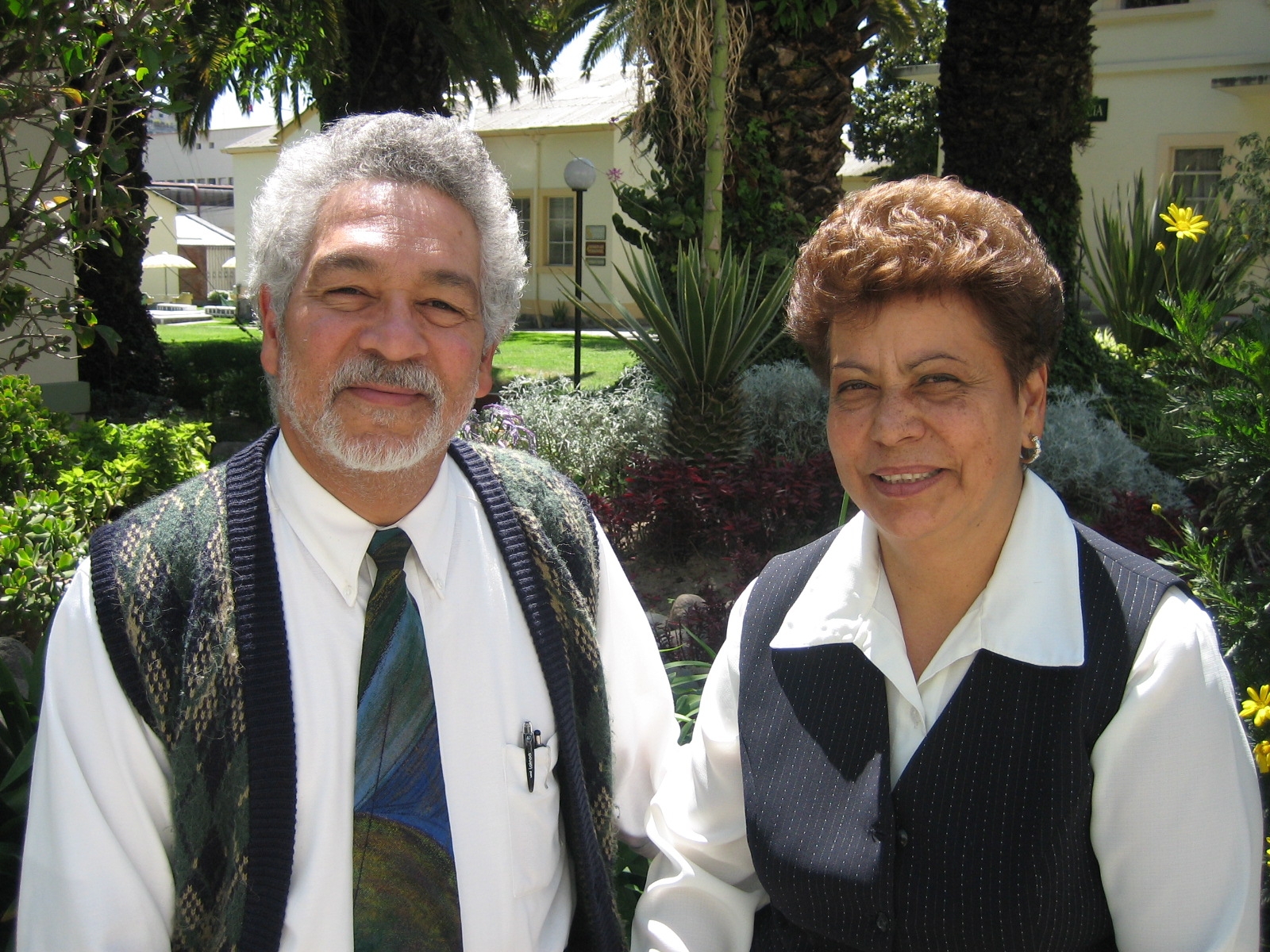
Chema & Carmen Reinoso
They served HCJB “The Voice of the Andes” for 42 years in the areas of radio production and administration. During that time, they also served as pastors in the Iñaquito Evangelical Church. Both these ministries are located in Quito, the capital of Ecuador.
Since 2008, the Reinosos have been serving In Touch Ministries in Atlanta, Georgia in the USA. Pastor Jose Reinoso is the Spanish voice-over dub artist for Dr. Charles Stanley, the host of the In Touch program. He is also in charge of the translation and production of this program.
Chema and Carmen have been blessed with 3 children -Cindy, Nardi and Josué- and they have 7 grandchildren and 2 great-grandchildren.
CECILIA: Briefly, tell me how you met and what it was that made you feel you were so right for each other that you decided to get married. And how long ago was that?
CHEMA: Well, we met at what I sometimes refer to as the “evangelical monastery” -I mean the Seminary (he laughs) in San Jose, Costa Rica. When I arrived, Carmen was already there; she was a year ahead of me. We started getting to know each other in that special setting. She was really about to conclude her studies but she was also helping out in the secretary’s office at the Seminary. I think Wilton Nelson was the rector of the Seminary at that time.
We’ve been married 49 years. We have 3 children, 7 grandchildren and even 2 great grandchildren.
So it was while we were there in the Seminary that something just happened to us. There was an affinity in our sense of vocation and a calling, and an affinity of love and a relationship between us also developed out of that perspective.
CARMEN: I think that one of the first things that happened was that we started out as friends and we got to know each other as friends. Then as we got to know each other better, we began to discover that we had a lot in common in many areas and God started changing our feelings for each other until… I was in my second year and he arrived for his first year, so we were there in the Seminary for 3 years because I stayed on an extra year when they asked me to help out until they could find another secretary. And I was very happy to do that! Taking care of him! (she laughs) I took care of Chema and he graduated in 1965.
I went back to Ecuador a few months before he graduated to prepare for the wedding. Then he came, and his parents also came from the Dominican Republic. We had a great time getting to know each other and they got to see Ecuador and see where their boy was going to live. They had to give a written consent for him to get married because he wasn’t 21 years old yet, and at that time 21 was when young people came of age in Ecuador.
CECILIA: Tell me about those areas of affinity that you say really got you started getting to know each other.
CARMEN: Well, since I hadn’t had very good experiences with regard to pastors’ wives, at first I didn’t think I’d make a good pastor’s wife although I’d always wanted to serve the Lord. So I told Chema that a pastor’s wife I was not going to be. And he said, “Well, think about it carefully, because I most certainly am going to be a pastor.” So I really had to rethink it!
CHEMA: A little astute about rethinking, don’t you think? (They laugh!)
CARMEN: Well, we had many opportunities to serve. The first year, he served a church where I had served the year before, so we had time to talk on our bus rides to the church where we were serving together. Later, I served at the Monterrey School, so he had to go alone, but there were many things in our service, our work, and our studies that we shared and we had a lot of time to get to know each other.
CHEMA: And also because she came from HCJB. I had only known about HCJB because I listened to the radio in the Dominican Republic where I’m from, but we shared a vocational interest in the area of communications and radio.
Then there was a kind of mini congress sponsored by DIA, the Inter-American Broadcasters, held in San Jose, Costa Rica, and representing Quito was Enrique Romero and Frank Cook.
Frank Cook is with the Lord now, and I think Enrique Romero is still living in Quito. Somehow they had heard about our relationship and they opened a door to see if something would develop and told us to keep HCJB in mind. And that’s exactly what happened when I came to Quito in November, 1965.
CECILIA: Okay, now let’s leave this very personal aspect for a moment. In this post-modern era, which in some places has become the post post-modern era, where we see that marriage is not necessarily the only option and we observe other options such as common-law marriages or even promiscuity as well as short-term marriages caused by separation or divorce. What message do you have for new generations after your 49 years of marriage? Is marriage, especially long-term marriage, still the best option? What would you tell them?
CHEMA: Well, there’s one more you could add to that list, and that’s the novelty of same-sex marriage. It all has to be considered from the Divine perspective. What has God established for a couple and for the home? Because the problem is that society tries to substitute God’s model, and when that happens, we start having problems, we start having difficulties. So when you accept the role of marriage, you accept it with the concept of “’til death do us part.” It’s not to be taken lightly like a Hollywood-type contract, because most Hollywood couples just sign a contract to get married and as long as it works out it’s okay, but when it doesn’t work out, then it’s over and they divide up the patrimony, la, la, la… From the Biblical standpoint, there is not such thing.
CARMEN: I think that God never makes a mistake and the way He designed marriage was for protection. In our case, so many years have passed and when we’ve come head-on with health issues, we’ve been there to support each other. I’ve been disabled for 10 years. For me, having Chema’s support is such a blessing, just knowing that I have someone my very own who is by my side walking with me through the difficult times! And God designed things like this to protect us, to help us and to bless us because He loves us. When we want to do things our way, that’s when things don’t turn out right.
CHEMA: And there’s another element to consider when you introduce the idea that short-term marriages and relationships of that type don’t have anything to do with God. A perspective of God also has another dimension that is eternal, because when He loves us, He loves us eternally through Jesus Christ. And the love He offers to humanity and to a couple and to every human being who has accepted Him as Lord and Savior is an eternal relationship.
This means that we don’t come to God and He says, “Okay, I’m going to love you up to a certain point or if you do this or that,” but rather than that, He loves with eternal love as Jeremiah says, “I have loved you with an everlasting love” in Jeremiah 31:3. So this same concept applies to other relationships in life. A specific example is a person’s vocation and job. We have received that vocation from God. It’s not because you studied at the university -which does have its value, because maybe you have polished what God has given you a bit at the university. But it’s that you have to make what God has given you count for the glory of God and for the blessing of others, and that projection will last until God takes us into His presence.
CECILIA: Just in order to have a little context, Carmen, can you briefly explain why you said that the support of your husband in your disability has been transcendental. What kind of disability were you talking about?
CARMEN: In 2001, after surgery to remove a tumor in the medulla, some nerves were severed and my right side was left completely paralyzed. Thanks to God and the patience of my colleagues at Hospital Vozandes in Quito, rehabilitation over a period of 8 months helped me function once again with some limitations, but I could function. I was able to continue preparing radio programs and at home I can defend myself. I’m slower than before, but I get along. But everything that we’ve learned during this journey has been important. And I think that now at this stage I’m appreciating the support more because I can see how much I need it and can feel it is a reality in our home.
CHEMA: To explain a little more, Cecy, Carmen had a vascular malformation in the spinal column between the 2nd and the 7th cervical vertebrae. What does that mean? This malformation created pressure in the spinal column and without surgery, a pool of blood would have formed that would have resulted in the risk of total disability.
As Carmen said, in 2001, the first surgery was performed in Chicago, but it didn’t turn out well. She was more or less okay for 1 or 2 years, and then the problem returned. At first she lost strength in her right arm and leg. She would drop things or she would fall. Then the doctors at VozAndes Hospital contacted a neurologist at Stanford Hospital in California who studied the case and said they could perform the surgery. I remember it was February 2, 2004 when she went into the operating room. Well, first we talked it over with the doctor and everything was expected to go well, but we knew there were always risks.
The operation lasted almost 7 hours, but before she came out of the operating room, the doctor came out and explained what had happened. He said the malformation had been corrected but during the surgery some nerves in the right side had been affected. That meant that the movement of the right hand would not be normal. The right ankle needs an elastic or a metal support. She can move her arm a bit. But in spite of all this, Carmen gets around quite normally. Sometimes she uses a walker or she has a little electric car we got her. So we press on.
CECILIA: It will really be hard to summarize this, but based on your experience, what is needed in order to achieve a solid marriage, a “’til death do us part” marriage? Maybe you can share some personal anecdote to illustrate these tips.
CARMEN: I think one of the most important things is communication. Very often we haven’t been taught to communicate. Good Ecuadorian mountain-born woman that I am, I tend to be very diplomatic. And Chema is from the coast, very Caribbean. At first, we had a lot of conflict. I expected him to act differently. Finally, one of those days when I had most probably left him speechless, Chema said, “Mommy…” Because what we do when we’re angry is not talk. We don’t say, “Okay, what did I do now?” So I told him he had offended me and he said, “Look, Mommy, I love you but that doesn’t mean that I can read your mind. If you don’t talk to me, if you don’t tell me what I’m doing wrong, then how am I going to change? So talk to me and tell me what you want and what’s going on and then we can move forward.” Oh, how wonderful! Now the door was open and I had permission! (They laugh!) So since then, I don’t stay quiet. If something needs fixing, we talk about it.
CHEMA: That’s the problem! She never shuts up! (They laugh!)
CARMEN: We talk, we converse, we argue, and I’ll say that for me that has been the secret because then there’s nothing hidden, there’s nothing to fear, there’s nothing to worry about because we talk and I know his heart and he knows mine. That has helped us tremendously in many circumstances.
CHEMA: And respect is another value, respecting her as a woman and respecting each other. Respect is also born from the love two people share, but it matures over time. Much of the feeling of union in marriage doesn’t come so much from compatibility and the vocational sense as it does when each one finds satisfaction in what God has given them. In our case, we have been compatible in our radio and television work. Carmen was very involved in a magazine in Costa Rica. It was Inter-American Broadcasters. She was involved with that magazine and she has similar interests here at In Touch Ministries. Precisely, she helps us two days a week as a volunteer in a very key area with Spanish translations of some spots called “Moments,” which are Dr. Charles Stanley’s monthly letters. She also helps proofread the magazine and so forth.
Here in Atlanta, by the grace of God, we’re also helping in a church in the south where I preach twice a month and there’s a brother who translates, because North Americans who don’t speak Spanish attend that church. So that’s been a good opportunity. And there are some other churches that invite us to preach like Fuente de Vida where Joel Zaldumbide is pastor or Calvary Church where another friend is pastor. Sometimes it’s the First Baptist Spanish Church or some other one.
CARMEN: One thing that I think has worked well and that should be taken into account is that Chema isn’t egoistic. He’s aware of what I can do well, and although men usually manage the finances of the home, he isn’t upset because I do that or have done it as many years as I could, because he knows that’s one of my gifts. So if you can let the other person function according to their talents and their abilities without feeling threatened, I think that’s a blessing on the one hand and it’s also another little stake in the good foundation of the family.
CHEMA: What Carmen has mentioned is key for the couple to understand what each one can manage better. I’m not good with numbers. For example, now that Carmen can’t write the checks, I write them and do all that, but she keeps check on the accounts and sees if something’s wrong. She does the follow-up because I’m lost with that.
So in a marriage we also have to take into account who manages the financial area better and let that person help or take charge. Good communication between the partners is necessary. It’s key, really key.
CECILIA: Good. So now you have talked about communication, about respect, about letting the other person do what they do best and letting that person develop. What about the issue of different personalities and temperaments? What does a marriage need “until death do them part”?
CHEMA: Well, Carmen touched on this. I’ll explain it this way: I come from the Dominican Republic coastal area. We tend to be hot-tempered. She’s from the mountains, from Quito, Ecuador, where people are diplomatic. So we are direct opposites, but the fact that we are direct opposites doesn’t mean there aren’t bridges of understanding. At first, Carmen suffered a lot because I vocalized everything. I’d get upset in a split second and sometimes I’d yell. I still do, but now it’s less. So it was like that.
But we have matured and grown in the relationship, and we have especially matured with regard to what the Word says about a relationship of respect, about a relationship that allows God to begin to change one’s temperament -that is fundamental. We’ve had conflicts, we’ve had our arguments, we’ve had our differences -and we still have different opinions about some things-, but those differences don’t keep us apart. We just respect them, recognize them and continue going forward, nothing more, because no marriage is perfect. Those marriages you see on television -even pastors’ marriages- seem very nice and look like earthly angels sent from who knows where, buy they aren’t real! That’s just a utopia. So that has helped us understand each other and mature and go forward.
CARMEN: One thing I’ve always told my sisters when we’ve talked about this is what the Bible says about not letting the sun set without having resolved the problems you’re having with your husband. And I think that a long time back we started resolving or clarifying our differences before bedtime and that has helped a lot because if you can talk about problems, that prevents the development of deep-seated resentment that can slowly separate a couple. This should start when people are first married.
CHEMA: There’s something fundamental worth mentioning, Cecy. For example, Ephesians says that the woman is to be subject and the husband is to love. These two concepts run parallel, because subjection doesn’t mean that Carmen or any other woman is inferior to the man. It is simply an order established by God. I’ve always said that I earn the right to be the head of the family by my attitude, because if I don’t act in accordance with what God has established, there’s going to be constant conflict. And the other part is what we men aren’t careful about. Love for a woman is shown by respect, by support, by lending a hand, by accompanying and by renouncing dictatorial attitudes, because some men misinterpret the word and think subjection means submission. Submission is a marketing concept and is servile. Subjection takes place in the same way I am subject to God, to the Lord. That is clear and it is fundamental, because we are equal before God who has charged us with a task and we are to carry it out together.
CECILIA: You’ve already talked a little about this, but does God have a specific role in married life? What about people who don’t even believe in Jesus Christ and therefore God isn’t part of their lives or plans?
CARMEN: There are three in a marriage: the husband, the wife and God. Because only God gives the love and the wisdom that keeps a marriage united. I’ve witnessed marriages that don’t recognize God that more or less get by. They follow the rules, humanly speaking, but when times are hard or there’s a crisis, they don’t have anyone to turn to. That’s when those marriages fall apart. Having God as the center of the home is basic. At least, that’s how it’s been for us, and I think it’s that way for every couple because we can’t walk alone. As humans, we have so many faults; as humans we have to face so many circumstances in life that if we didn’t have God’s help, it would be very difficult to face them.
CECILIA: This blog is read all over the world, so who is that God and what is the true God following this context?
CHEMA: That’s exactly what I wanted to talk about. We’re talking about the God of the Bible. We’re talking about the God Creator of the Universe. We’re talking about the God who had the idea of the couple and therefore, of the family, and therefore, of the extended family. We’ve taking about the God who created us with a plan and with a purpose. We’ve talking about a God who is alive, a God who relates to us through the person of Jesus Christ. We’re talking about a God who, seeing us in our position as rebels against Him, as sinners against Him, took the initiative to rescue us in the person of Jesus Christ. That’s the God we’re talking about! The One who gave Himself in Jesus Christ on the cross

The Reinosos´grandchildren and great grandchildren
of Calvary in order to bring about our salvation and our redemption and reestablish communion of God with man and man with God. We’re talking about the God who really has a plan for the husband, a plan for the wife, a plan for the children, a plan for the family. We’re talking about a God who really has a plan for society. We’re talking about the only true God who lives, who exists, who rules over the heavens and the earth and who is weaving the threads of history into a conclusion of triumph where He will return in the person of Jesus Christ to establish an order on Earth. At present, you can see countries and political ideas trying to give the impression that they truly have the solution for humanity. And time after time, it doesn’t matter what political model it is, they have gone against the Planet Earth, even more so when they don’t recognize God in their schemes and their projections. We’re talking about the God who created the heavens and the earth, the God who is sitting on His throne and rules over everything as Psalm 103:19 says.
That is the God who unites us. That is the God we believe in, and that is the God we want others to also be in contact with.
CECILIA: What advice can you share with the readers of Towards Excellence, who may be facing a possible separation or a possible divorce?
CARMEN: I think a divorce or a separation is something very sad, not just for the couple, but even more so when there are children. When couples face these situations, the children have so many problems and traumas, and even when there aren’t any children, a little bit of the heart is destroyed and that’s very painful. And I think every marriage deserves the chance to get established, to find help, to not indulge in whims and egotism, to accept each other as they are before God so they can recognize their faults, because marriage is made or broken by the two partners, not just by one of them. Each one needs to recognize the weaknesses that are contributing to the destruction of their marriage with the help of a professional and of God so they really see themselves as they are so they can move on. I don’t think there’s such a thing as a hopeless marriage. There is hope for marriage!
CHEMA: One of the greatest causes of problems in a marriage is the egotism that Carmen just mentioned. Egotism always leads a person to blame someone else. So she blames me. In all marriages, a person usually tries to wash his hands of blame, and they say, “I don’t love him anymore” or “I don’t love her now,” so saying things like this encourages the idea of divorce as a solution.
The Bible sanctions divorce in one specific case -adultery, issues related to adultery. But when it’s for no reason at all or because she doesn’t cook rice like she used to or because she’s not careful about something -those are things that can be fixed; they’re things that can be discussed. But when I close down and think that things have to be the way I say, then we’re creating a one-way style that doesn’t allow for the kind of communication that can surmount the difficulty encountered.
When there have been differences, it’s often a good thing if the couple takes a little time-out, a kind of vow of silence, and during that silence they reflect individually. The Bible talks about having a time of prayer alone to seek God’s direction.
It’s also important to look for help. It’s never a bad thing to get help from a trustworthy person who believes in Bible values -not in human values, because that’s something different.
And if you do that along with some other things, you can work out the differences that arise. What you need is the desire, and when there’s that desire, communication can take place, you can look for help, and most of all, God is who is guiding us if we allow Him to lead.
CARMEN: If you have problems, if you have difficulties in your marriage, you need to begin to take a look at yourself and to look at God and ask Him, “God, what can I do to improve this situation?” I assure you that you’re going to find the solution, you’re going to find an answer and there’s going to be hope for your marriage. After a few years, you’ll look back and that breakdown or that difficult time is going to be simply a bridge where you started to mature and where your marriage set down the roots it needed to prepare you for old age, until God separates you and your children.
CECILIA: Finally, is it possible that this breakdown or desire to separate is an opportunity for a person who perhaps does not know God to look to God and an opportunity for God to respond and manifest Himself?
CARMEN: God can indeed use this experience!
CHEMA: Yes, yes! There’s the case of a young man, the prodigal son that illustrates this. Many marriages reach a limit and when that limit is reached, the experience is like that of the prodigal son who was left abandoned without friends and without money and he hit bottom. When you hit bottom, what’s left? You don’t keep digging yourself in deeper -it’s time to lift your eyes to God and say, “Lord, help me!” What did the prodigal son do? He started thinking and he said “I made a mistake! Why have I left my family? I had everything with them.” So instead of saying, “No, I’ll not go back,” he did the right thing. He swallowed his pride and went back home, and when he got home everything improved. Going back home means going back to God so He can rule and lead in your life.
+^+^+^+
“We don’t need to excel for the sake of excellence. I think we need to excel for the sake of God’s name.”
Daniel Njenga Maina
Daniel Njenga Maina, a former Compassion sponsored child. Njenga, as he prefers to be called, is 29 years old. He was born in Kenya, about half an hour away from Nairobi.
Njenga is currently studying Masters of Arts Intercultural and Urban Studies at Moody Bible Institute in Chicago. He will graduate in May, 2014.
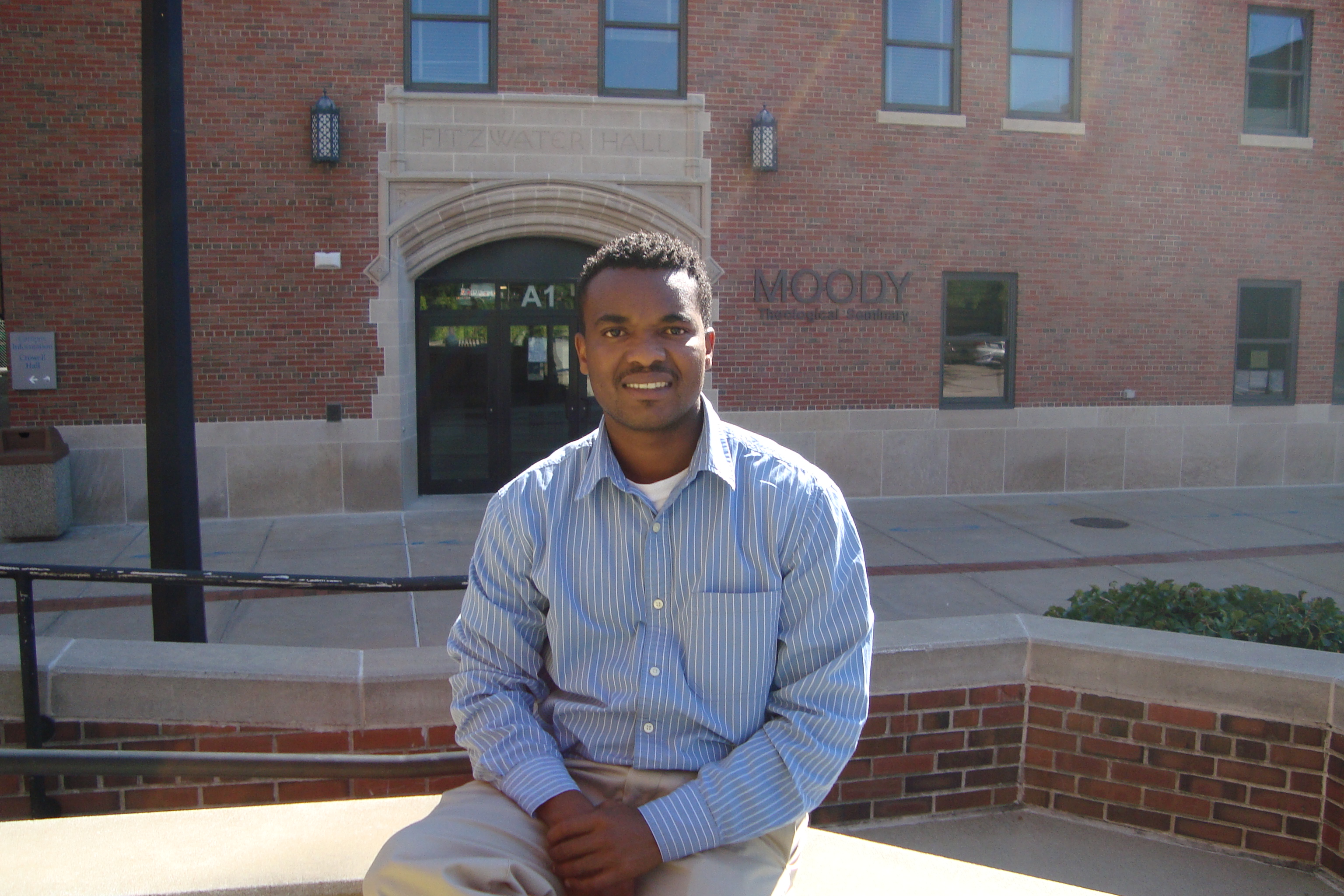
Njenga at Moody Bible Institute
Njenga travels twice a month across churches in the US speaking on behalf of Compassion International.
Njenga is also a church planting intern in a local church in Chicago and he works part time at Moody Distance Learning where he coordinates Graduate modular classes.
When Njenga goes back to Kenya, he is planning to start a church, and concurrently train pastors and lay leaders in theology. He is also working towards helping a local school in Kenya in order to build a library, and hopefully some other schools will receive the same benefit in the future.
Tell us about your background and what poverty was like for you when you were a child?
For me poverty begins with my mom. My mom was 14 years old when she gave birth to me, so, a very young woman. She didn’t have any education. She was sent out of her home by my grandmother. And then, when I was 9 years old, my mom passed away. That was very hard! And you know, my dad was not there either! Actually, I never knew who my father was.
My mom had tuberculosis and she couldn’t access medical care. That was a very hard season for me. By the age of 7 I hadn’t started going to school and we were living in a 10 by 10-feet house, a very small house. I took care of my sister who was three years younger than me. I mean, growing up was really hard in those conditions!
There were not people who were wealthy where I was. There were so many drunkards. Drugs were being sold like a hundred feet away from my house. So, there was temptation to get into drugs growing up as a young man. And yeah… there was a very famous gang. And so many young people resolved to get into that gang as a way of escaping poverty. Happily, I never joined that gang or never got involved with drugs.
I never went to church either. My grandmother did as she was Catholic. But I never went to church because my mom did not go to church at that point.
Before my mom actually passed we moved into my stepdad’s house –my sister’s dad. He did what I would call ´mechanical work´ –gas welding. So, he worked somewhere in the field…places where cars were repaired. And he would just sit there and wait for work to come. So, that was very hard. You’d never know whether he would make money. There were times when we were at home, waiting for him to bring food because he didn’t leave us any money. And he would come back after walking about 25 kilometers… far, far away. And he’d come and say, “I don’t have any money for you today.” Then, we’d just drink water and spend the night in hope that the next day God is going to provide something for us.
What was the concept that you guys had about God at that moment of life? Was there God for you?
I can’t remember that exactly…at that age of 7. I can’t remember a concept of God. But at the age of 9 because I already joined the Compassion program, I started to learn about God and I remember that was very strange for me. I remember being asked to close our eyes and pray, and it didn’t make sense. (He laughs!)
You didn’t see anybody, you didn’t feel anything…
Yeah! I couldn’t feel anything. I mean I just covered my eyes but I was half open trying to see what’s going on.
How was the experience of becoming a Compassion sponsored child? How did your life start to change?
Oh, I think the biggest thing that happened to me was to become a part of a church. You know being introduced to the Gospel at such an early age is just awesome! As for me, when I look back, I see that as one of the greatest investments that was made in my life. Just the concept that you learn –God loves us! You know, for me that was a strange idea that somebody loved me because I think what happens when you are in poverty, the concept of love is a kind of hazy or it doesn’t make sense. And knowing that God is there for me, it just gave me hope! But also, knowing that someone is meeting your basic needs like food or health care when you go to the program; it truly gave me hope! I was also taught how to brush my teeth at the Compassion program. I received my first toothbrush and my first toothpaste. I have told people I almost ate the toothpaste because it was so sweet! It tasted so good! (He laughs!) And then I got, you know, a blanket and I had my own mattress… a comfortable mattress to sleep on and I would share it with my sister.

Njenga visiting Compassion sponsored children in Kenya
Not only that, Compassion also paid for my tuition to start going to school and that opened opportunities for me to even start dreaming of who I will become.
You know, I got text books, I got exercise books, and they paid for my uniform. My self-esteem was being built up above all. I even started to see love in myself. And all of this was possible because of my sponsors!
How did you learn this concept of God’s love since you actually didn’t experience a real, personal love here on earth?
Yes, it was hard growing up. My dad (stepfather) was very abusive in the sense that he would beat me a lot. I struggled so much although I knew that God loves me. When I was a teenager I stopped going to church. I would keep attending the Compassion program on Saturdays but I wouldn’t go to church on Sundays because I was struggling with that idea.
I tried to run away from that as much as I could, but the more I ran away the more empty I became. And finally, my hope was only in the Christian faith. After two years, I went back to church and I rededicated my life to Christ. That changed things amazingly! One of those, I wanted to forgive my dad (stepfather) because I realized that my heart was so heavy and I couldn’t have peace with God.
From that moment, I started to appreciate my dad (stepfather) more, you know, I started to see his efforts to raise us. I started to see all the struggles he went through without a wife. So, that made me appreciate him and respect him!
Although, my dad (stepfather) never provided as much as I would have wanted him to, that never made me see God as a distant god. As for me, being part of the Compassion program was enough reason to know and understand that God is good. My needs were met. There was somebody far, far away that was concerned about me and that meant that there’s a God who truly loved me. Oh Yeah!
How did you move from hopelessness to a life full of hope and dreams?
You know, I’ve never thought about who I want to become. One day, when I was a child, I mentioned that I want to be a mechanic because my dad was a mechanic.
Or I would say I want to be a carpenter because I would have only seen “carpenters.”
And then I started reading books and I learned that there are people who are called doctors, there are people who are lawyers, there are engineers. So, I wanted to become an engineer at certain point. Later, I changed my mind and I wanted to become a lawyer. You know, because I wanted to fight for the rights of people. And finally, I ended up becoming a teacher, because of the impact that teachers had in my life. So, I stopped to dream about my own self and I started thinking of how ‘what I want to become can help other people.’
Then, I did not only become a teacher but God also called me to become a pastor. And I’d never thought about going to seminary. Actually, I didn’t have any single coin to pay for my tuition. I had talked with people and I was hoping to do some fundraising. But Compassion, at that very moment, opened up the Moody opportunity and I applied for this scholarship to come to Moody Bible Institute in Chicago. I waited for about 5 to 6 months… it was very competitive! Students across the 26 countries where Compassion works were waiting for this great opportunity.
I wanted to come to Moody and thank God I did! It’s been a great experience being here!
So, from this special journey, what are your dreams and plans? And how God is leading you towards them?
Good question! My dream when I came to Moody was to go back to Kenya and do church planting, and at the same time help pastors who’ve never had the privilege to go to seminary like I have. I still want to do that, go back to Nairobi and start a church there. Also, I want to start a network that would mobilize resources in Kenya, and if possible outside Kenya to see the church there being equipped to continue to do the Great Commission. So it’s a big dream and there are times I feel like “Maybe I can’t do this.”
But the more I start to look back at what God has done I feel like “God can do this.”
I’m also passionate for education. The opportunity to go to school has just given me the privilege to meet so many people and even to be here in the US. So, I have a friend who has given me a piece of land to build a resource center for the community. I want to come up with a model for Kenya where we can have a resource center in one place but it will also be replicated across the country. This resource center is a place where children can come and read a book or do their homework. People who’ve graduated from high school, they can come and help those students. It will be an opportunity to teach other young people how to give back to the country and to their communities what they have already received.
I also hope that the resource center would be a place where pastors can come and prepare their own sermons and study more.
I think seminars can be conducted as well.
What is your main motivation to accomplish these ambitious goals?
I think everybody needs to grow in excellence, you know to keep working on their skills. So, I feel that I want to do those things. But, I also need somebody else to keep pouring in me. I think that’s a very good concept… people pouring in you, you pouring in them, you pouring in others and they pouring in other people. Then, you will be able to see transformation!
Because I would say we don’t need to excel for the sake of excellence. I think we need to excel for the sake of God’s name. I mean, if God created everything so beautifully, I think as Christians we need to exemplify that. God has created us different. He has given us so many gifts. So, it is the matter of using your gifts to serve other people. Because excellence is not just about us, it’s about other people. And people would be able to notice our excellence. Then, they will desire it and they will even ask…why do you do this? So, our excellence should make people ask questions about our faith.

She is a professional in the areas of Communications, Public Relations and Leadership Training.
Cecy is self-motivated regarding living a life in the pursuit of the type of excellence that inspires others to travel the same path.
Her greatest source of inspiration is Jesus Christ, the Lord of Excellence.
 Towards Excellence
Recent Comments