Category Archives: Interviews

A Passionate Advocate for Children

“Children live in a broken world, not just because of the realities of poverty, abuse and injustice, but because of the failure of adults to live out their spiritual beliefs and moral values.”

Carmen Menchit Wong

Menchit Wong was born in the Philippines and is currently the Global Advocacy Director of Compassion International.  She also serves as the Lausanne Movement Senior Associate for Issues on Children at Risk, and serves in the global leadership committees of the 4/14 Window
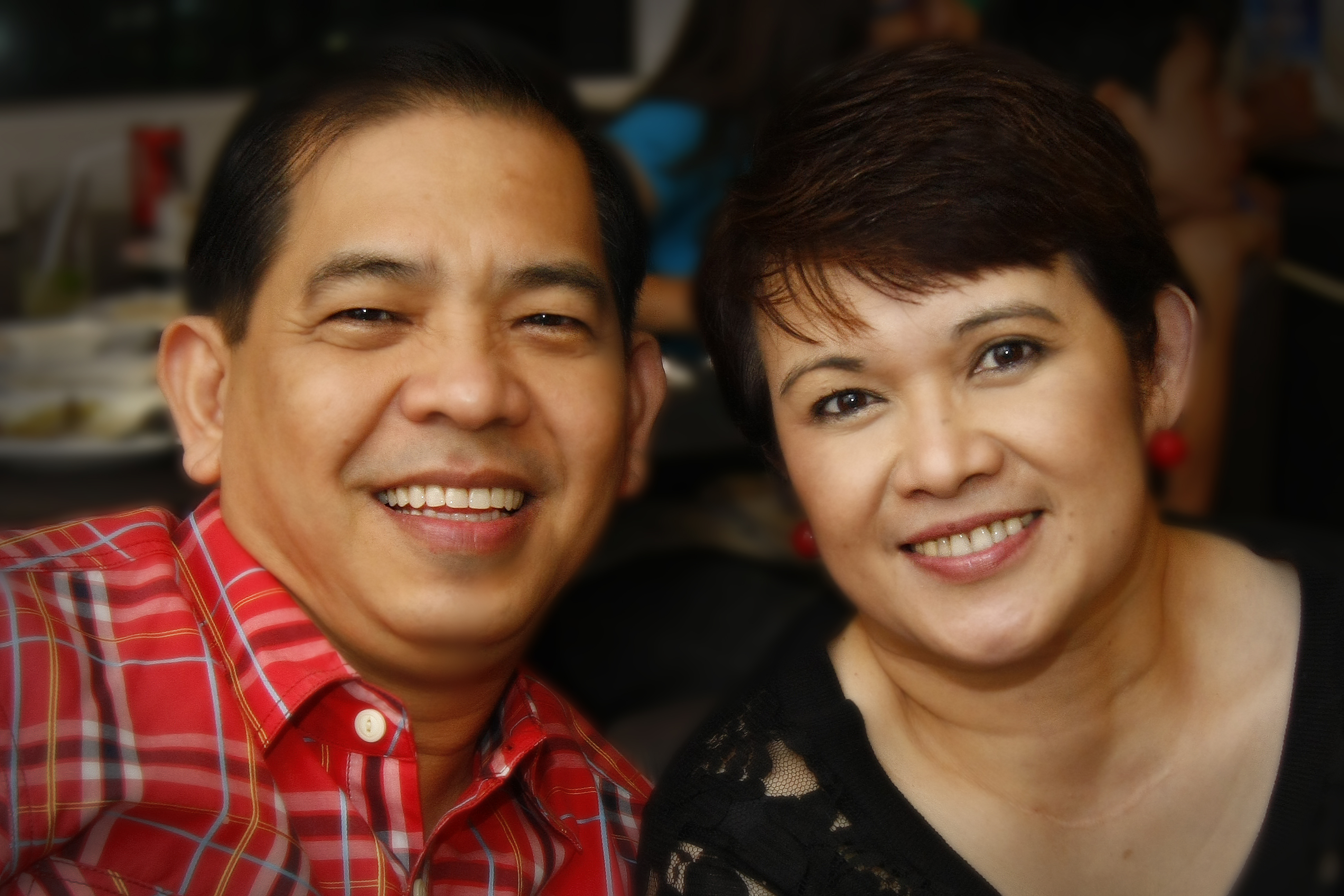
Menchit and her husband Rico

Menchit and her husband Rico

Global Movement and the Global Children’s Forum.  Menchit has been in the ministry of child advocacy since 2004, but God called her into ministry with children and youth since her university days, through the life of a rescued child who lived in an orphanage in the Philippines.  As Menchit says it with a big smile, she is very happily married to Rico, her husband of 26 years. “God has blessed us with three wonderful sons who equally love the Lord and serve Him.”  – They are Eric (25 years old), James (24) and Joshua (13).

Generally speaking, what does a child need to grow holistically healthy? What should mom and dad do to contribute to this aim? What if one of them is missing from the child´s life?

Please allow me to first explain a little bit what I think is holistic development of a child.  I will give special emphasis on what “holistic” means because it has a significant spiritual meaning.  The term holistic implies being made whole or complete or made full.

In Ephesians 1:9-10 (ESV), Paul describes what God’s purpose is for each one of us, including children:

“making known to us the mystery of his will, according to his purpose, which he set forth in Christ as a plan for the fullness of time, to unite all things in him, things in heaven and things on earth.”

I believe therefore that a Biblically-based concept of holistic development of children should mean reconciling children to Christ and seeing their fulfilled development and purpose by being united in Christ.  A holistically developed child therefore means a child growing in all aspects of his life so that God’s heart and purpose for him is fulfilled, and that Christ is glorified in his life.  This realization brings a great implication in that even if the world provides all the material, social, intellectual and economic needs of a child but does not afford opportunity for the child to encounter Christ as his Lord and Savior, the true meaning of holistic development will not be achieved.  The other significant implication is that only Christ’s followers can be truly used of God to bring Christ’s saving Gospel and transformed life (a ‘whole’ life) to the children.  Thus,  if Christians, or the Church as a whole, neglects or abandons its role in holistic development of children, then children would be ‘lost’ to the ‘world’ and the kingdom of darkness, because only those who have truly experienced Christ can be used of God to bring holistic development to the little ones.

When we therefore pose the question, ‘What does a child need to grow holistically healthy?’, our response will be incomplete if we only say that what a child needs are learning opportunities, material resources and a vibrant  social support system of relationships to bring about his holistic well-being or health.  A child’s first need is to know Christ and experience His saving love, and to live under His Lordship.  It is Jesus who will accomplish and fulfill His purpose for the child’s life, and will be the one to bring all the spiritual/social/physical/ intellectual/economic resources, opportunities and  relationships the child needs to be made whole and complete in Christ.  Holistic development is not genuine if it is not characterized by the active Lordship and presence of Christ in the child’s life and well-being.

In the book of Deuteronomy, particularly in chapter 6, the Lord clearly lays out the significant and critical role of parents in the shaping and development of their children.  God says these commands and decrees are meant,

“so that you, your children and their children after them may fear the Lord your God as long as you live by keeping all His decrees and commands that I give you, and so that you may enjoy long life” (Deuteronomy 6:2).

This is further reiterated in Psalm 78 where the Psalmist declares,

“we will tell the next generation the praiseworthy deeds of the Lord His power, and the wonder he has done…..so the next generation would know them, even the children yet to be born, and they in turn would tell their children.  Then they would put their trust in God and would not forget His deeds but would keep His commands” (Psalm 78:4, 6-7)

What these verses are saying is that parents have been given that sacred trust to instill obedience and fear of the Lord among their children as the foundation upon which their children will enjoy a long and happy life – that is, experience fullness and abundance in every aspect of their life.  We also realize from these verses that the parents’ teaching and life example bears influence and impact beyond their lifetime, because the next generations will become what their previous generations taught them.  Parents have a sacred responsibility before God to provide for their children’s needs, to love, teach and nurture them with Jesus’ unconditional love, and to lead them to have a saving knowledge of Jesus Christ and live in obedience to Him. Parents must first serve under Jesus’ Lordship, because otherwise children will see what is behind their parents’ shallow faith and hypocritical attitude and even be led away from the Lord.

It seems like child abuse rates (any form of child abuse) are getting higher and higher all the time, no matter which social context children belong to. Why do you think this is happening in our current era: the high tech era, the global communication era, the era of great developments?

It is often said that compared to previous generations, today’s children and youth really are a fatherless generation.  Children live in a broken world, not just because of the realities of poverty, abuse and injustice, but because of the failure of adults to live out their spiritual beliefs and moral values.  Materialism and hedonism are the favored gods of their parents and this generation – living for pleasure and having no stand for what is right   are more enslaving than other faiths or false religions.  We could say that many children and youth today look like they are ‘walking dead’.  They have their electronic gadgets and are hooked up to the Internet and TV 24/7 hours of the day. They become isolated from the rest of the world and fail to build solid and long-lasting social relationships.  They are vulnerable to pornography, abuse and instant relationships on Facebook, Twitter and other social networks because the adults around them abandoned their sacred role to shape their lives according to God’s will for them.  When biological parents bow out of their sacred role, we in the Church or faith community must step in to nurture and take care of the children and the youth.  We cannot let this generation be sold to the kingdom of darkness.  There are several ministries and opportunities that we have around us to holistically care for this fatherless generation.

As Child Advocacy Director of Compassion International, what do you think the role of an adult should be as a child advocate?

As adults, we should first know and appreciate God’s heart and purpose for children, and then engage the rest of the world to use this Biblical framework ( a transformed mindset and heartset) to care for children and facilitate their holistic development.  What are some of the current beliefs we have that we have to challenge?  First is that God sees and loves children as they are and values them as much as adults.  Children have intrinsic worth because they are created in the image of God.  Therefore, adults should not adopt a performance orientation and only accept children when they are good or when they ‘perform’ according to their expectations, a huge contrast to the world’s value of ‘loving only what has high market value.’

Adults should also give safe space and nurturing environments where children can grow, be healthy and learn.  Even if we speak on the top of our lungs about child advocacy, and not address tangible needs of children, in terms of safe space, protected environments and nurturing relationships, we would have failed as child advocates.

Finally as child advocates, we should always provide avenues for children  to participate actively in their development – this means providing as many sound opportunities for them to discover and use their talents, to listen to them and welcome their expressions and thoughts, to celebrate their accomplishments, and finally to actively protect them in potentially  abusive or vulnerable situations.

What does the Church need to do in order to contribute to the child´s healthy growth? And how can the Church become an effective child advocate?
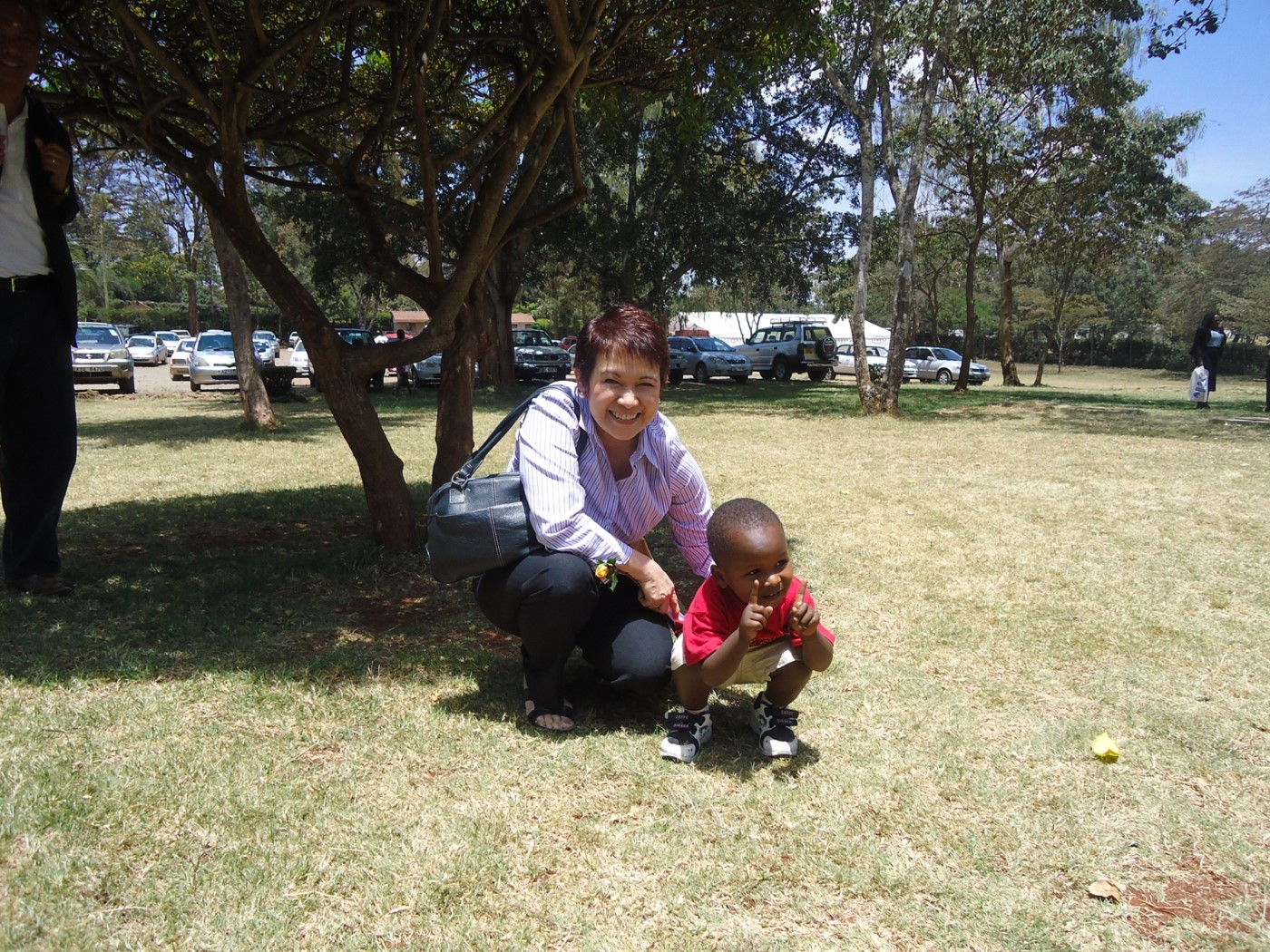
I got the vision mummy

“I got the vision mummy”

I would like to reiterate a quote from Dr. Bambang Budijanto, Asia Region Vice President of Compassion International, that the Church (the Ecclesia) is God’s sole instrument to carry out the Great Commission – he talks about it as Plan A of God; there is no Plan B.  This means that the task of the Church, the Body of Christ cannot be relegated to any other institution such as the government, the other sectors of society that do not believe God or proclaim His truths. In the same light, the Church cannot relegate to others its God-given task to nurture and advocate for children’s healthy growth and fulfillment of God’s divine purpose for them.

There are 4 Rs that the Church can use to remember our God-given calling to advocate for children – REACH, RESCUE, ROOT and RELEASE.  This is adopted by the 4/14 Window Global Movement.  Our task is to reach all children for Christ, rescue them from the traps of abuse, modern-day slavery, injustice and neglect, root and disciple them in God’s Word for long-lasting faith, and finally, to release them to do God’s work today.  Children today can be active participants in the mission of God, without having to wait until they are adults.  The Bible give us many examples of how God used children to fulfill His mission – some of them are David, Esther, Daniel, Joseph,  Naaman’s servant girl and the kind but unnamed boy who shared his lunch with Jesus to feed the thousands.  Releasing children’s potential is a powerful advocacy message, equally important as rescuing children from abuse, injustice and violence.

Finally, what do you think it is the potential of a child who has grown in a healthy environment? Could he or she become a person of excellence who may eventually contribute to the transformation of an ill community? If so, would you share any example briefly?

As mentioned above, the Bible provides many examples of children whom God transformed into persons of excellence to  contribute to the transformation of their community – the stories of David, Daniel, Esther, Joseph and the prophet Samuel all speak about the importance and impact of nurturing children in God’s Word and adults serving as wise teachers and godly examples to them.

Having served in Compassion International’s ministry with children and youth for more than 20 years now, I have personally witnessed, I had been touched and I have been tremendously blessed by powerful testimonies of children who came from terrible circumstances but who are now excelling as leaders in their work and ministries after being nurtured in God’s love and truth.  One of them is  a lovely young lady from the Philippines who grew up in a very poor home with a drug addicted father, and lived in a cramped house with relatives who repeatedly told her that she is ugly and has no future because her father cannot fend for his kids.  Often living under fear of abuse and molestation, this young girl thought she would never have a bright future, until that day when a Christian church offered a scholarship for her to attend a Christian school and learn about Jesus who loves her and came to save her.  Her teachers in school, pastor at church and director at the Compassion-assisted child development center project served as her godly parents.  She was blessed to receive a university scholarship and became one of the first graduates of a leadership development program.  Her practicum course in that leadership development program was discipling and providing livelihood training for young, former child prostitutes.  She never forgot these young women who became her friends and inspiration.  Years later, when she graduated at the top of her class in university and in the graduate school, she became a co-founder of a social enterprise meant to help formerly sexually trafficked children.  She has risen from the mire and the clay of her painful past because of Jesus through the love of the Church around her.  She now inspires the next generation of young women leaders.  Her life magnifies Jesus’ Name!
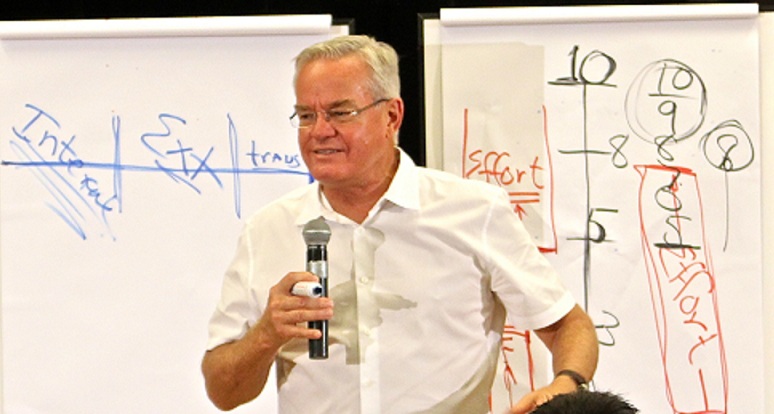
Exclusive Interview with Pastor Bill Hybels

“[The Church] It’s the hope of the world when it’s being the hands and feet of Christ in the world…”

Bill Hybels

Founder and Senior Pastor of the Willow Creek Community Church in South Barrington, Illinois, USA.

Pastor Bill Hybels (courtesy of IEVI)

Pastor Bill Hybels
(courtesy of IEVI)

He is also the creator of the Global Leadership Summit. Pastor Hybels is an author of a number of books, especially on the subject of Christian leadership.


How would you define a leader of excellence either in business or within a Christian environment?

Leaders have to be moving groups of people in a God-honoring direction. I often refer to leaders as people who move people or causes from here to there. And the “there” is wherever God wants something to go. Leaders have to be clear vision casters. They have to build teams. They have to inspire and motivate, they have to solve problems. So there are a lot of skills required in making a good leader, but the main understanding of what a leader does  is that he takes a cause for a group of people and moves them  from here to there.


There are great leaders in the world, in politics, in science, business, etc., but they do not necessarily pursue the Christian faith. What would you say to them?

From a private conviction standpoint, I wish every person on Planet Earth knew God in a personal way. I wish everyone could experience His love and His guidance, and so that’s not a problem because that’s not going to happen, at least not in my lifetime. So even though someone’s not a Christian, I’d want to help them be as good a leader as they’re capable of being. In other words, I’ve got to say everybody wins when a leader gets better. If a principal at a school –even a public school- gets better, everybody wins. The teachers win, the students win, the parents win, you see. And if the leader of an athletic team, a coach, gets better, then the players win and the players’ families win and the school wins. If someone in government –doesn’t even have to be a Christian government- but if a leader in government gets better, everybody wins. So I’m trying to raise the level of leadership in any position, in any arena of influence anywhere in the world.

The Church is the hope of the world. But what does the church of today need to do to truly act as “the hope of the world”?

The Church is the hope of the world when it’s working right. It’s not the hope of the world just when it shows up and holds services. It’s the hope of the world when it’s being the hands and feet of Christ in the world, when it’s helping people far from God find faith, when it’s helping people who know God progress to their full spiritual potential. It’s when it finds lonely people and enfolds them into the Biblical community. It’s when the people in the Church begin to serve the poor and fix what’s broken in society and overturn a fraction of systemic injustice. So the Church has to be doing a lot of things right for it to really credibly be viewed as the hope of the world. But when a church is working right and when it really is the hands and feet of Christ in the community, there’s nothing like it. There’s a power, there’s something supernatural released into that community that no other institution in society can compare with.

Exclusive Interview with Nick Vujicic

Nick was born in 1982 in Melbourne, Australia, without arms and legs. There was no medical explanation or warning.

Today, Nick travels around the world, sharing his story with millions of people and inspiring to diverse groups from young people to professionals.

Watch this exclusive interview with Nick!

A Passionate Radio Host expresses her Heart for Jesus over the Air

“We will be accountable at the judgment seat in front of God for what we did and what we didn’t do…Seek ye first the kingdom of God and wisdom will be granted unto you.”

DSC00850

Nancy Turner, Host of “This is the Day” at       Moody Radio

NANCY TURNER

Nancy is host of the program This is the Day at Moody Radio in Chicago, Illinois (USA). She also hosts Music for Sunday and the Praise and Worship Channel streaming on the Internet.
Nancy was born in Mishawaka, Indiana but grew up in Michigan. She began her radio career at early age while she was in high school, producing and hosting a program on the local radio station. After graduating from high school, she pursued studies on broadcasting.
Nancy has worked at many stations in Michigan and Illinois. She has helped host the Muscular Dystrophy Telethon on WGN-TV, fund-raising efforts on WTTW-TV in Chicago and the Country Music Today program on local Chicago television.
Nancy has a college aged daughter, Molly. Nancy loves experiencing the outdoors as it reminds her of her unforgettable childhood.

Let me begin by asking you to introduce yourself so our readers can get to know you better. Who is Nancy Turner?

Well, I’m Nancy and I grew up in Michigan in the United States of America. I grew up in the country and lived in a place where I could run wild outdoors and play in the woods, in the creeks and all of that, and had no idea I would ever be used by God in a place like this. I don’t deserve it, but God’s grace has given me this opportunity to do this, and I’m thankful to Him, and every single day, every single day I say, “Lord Jesus, may You use me to bring people to you who would know your grace and your saving, saving love.

So you are a Christian?

Oh, yes, yes. But my turn to Christianity didn’t happen suddenly with a brilliant light of illumination. My time of becoming a Christian has been a gentle, long revealing of God in my life. I learned what it meant to be a Christian when I went to a big church here near Chicago called Willow Creek and I learned that what it meant to be a Christian was to be a Christ-follower. I think many of us don’t know that. We think we’re Christians because we know about the Bible and we believe in God, or we think we’re Christian because we go to church or we do nice things for people. But to be a follower of Jesus means that we give up ourselves. We give up who we are and we become wanting to serve Him and be like Him. We give up our agenda of what our life can be and relinquish it so that it becomes what He wants it to be. Does that make sense?

Yes, yes! And I think we will get back to this point a little later. Now could you tell us about your professional background?

Well, I started in radio when I was in high school in a local radio station. I was a Junior in high school. In 11th grade and 12th grade I worked at the local radio station where we produced our own program and did all that stuff. That’s where I first realized that I liked it, but it wasn’t until several years later after I graduated from high school that a gentleman who I was selling newspaper advertising to as a profession suggested that I go and speak to the local radio station, and so they interviewed me. I’d never had a professional job in radio, but they decided to let me sell advertising and gave me a one-hour program once a day, and that’s where it began for me. That was probably in 1969. So for that many years God has given me the opportunity to be in radio, but not always Christian radio.

So along that line, tell us a little bit about how you found your passion for media and why you decided to get involved in TV and radio, because I think you were also involved in TV, right?

Yes, I did some television. I’m basically a shy person and I don’t like to get up in front of people, so if you ask me to stand up and speak in front of a room of two people or two hundred, I will be equally as nervous about that. But to get up on television or to do radio where I will be seen by thousands and thousands of people or be heard by millions of people does not bother me. Somehow that is just God’s grace, I guess. I felt that God opened doors along the way when I didn’t even know Him and gave me the opportunity to grow sort of behind the scenes to bring me to a place where I would say, “I don’t want anything of my radio career to diminish God.” So as I was going along in my secular career, which was country music for many, many years, I still would say at the beginning of each of my programs, “This is the day the Lord has made. Let us rejoice and be glad in it.” And I thank God that the program directors at the secular stations were ok with that. I’m not sure that that would be ok these days, sadly, with the way Christianity is being treated. But even in the times that I worked in secular radio in country music, I would listen to Christian radio and just say, “God, I wish I could be there.” But I was earning a lot of money in secular radio –lots of money! To come to Christian radio meant very little money, but somehow that didn’t bother me, and I said, “God, if You will open the door, I will go.” So it took many years of me hoping and praying for that, and eventually one day I was granted an interview here at this radio station, Moody Radio WMBI in Chicago, that gave me the opportunity and they gave me the program to start one day a week. So here I am. I’m still doing it and I praise God for it.

You are currently involved in Christian radio production. Tell us how can radio production be a channel for the transformation of lives, either for Christian believers or even for followers of other religions or beliefs?

Radio is amazing, because it comes into your home wherever you are, and you can privately take in the message. You can bring it into your heart as God would have it, as you listen. So I think the music and the words that I can say or any speaker can say on the radio is a private moment with somebody, whether they’re in their kitchen or their automobile or their home or their workplace or they’re walking with a device that they can listen to in their ear, it’s a conversation that is private. And I believe that can lead to so much transformation. I’ve had so much e-mail and regular mail from people who have said, “I heard that song and it really changed my perspective. I heard that guest you had on and what they had to say changed the way I looked at life and suddenly I found hope.” There have even been people who through many years here at Moody Radio  -you could learn about that from many other people who have worked here much longer than me- where people have been contemplating suicide and have stopped that process because they heard a message of hope for their life.

Marriages have been saved because people have heard that Christ can restore their marriage if they will trust in Him instead of trusting in their own way to save their marriage. Christ can actually come between two people who are finding it difficult to relate and communicate and to know each other. Christ can get in the middle supernaturally, if I can use that word. The Holy Spirit can change people’s hearts, when people commit to Christ, He’s in between the two people, and then all the conflict goes through Him first before it comes back and they can resolve their problems in their marriage and in their relationships.

Now, for you and me, Jesus, the Way, the Truth and the Life is the God who can positively transform the life of every single human being who is willing to be changed and molded. But for those who are probably reading about Him for the first time now, who is this God, who is this Jesus that has such power? What would you say to them?

I would say all truth comes from God. All truth! And if you want to know what truth is, seek it. You’re a smart person. You who are reading this are wise, right? You’re smart, you would check things out. The person who’s reading this right now, you would say, “Ok, I don’t fall for just anything. I’m smart. I check things out.” So if that is you, and you’re a person who wants to know truth and not labor under delusion, not labor under the false teaching of any kind, not be led astray or be following some kind of teaching that you never checked out, you would check it out! Well, check out Scripture! Go to the Bible. Read it. In fact, if you really want to find truth, say, “God, if You are real; God, if You exist; God, if you care about me; God, if these claims in this Bible are true, would You reveal it to me?” Now if you can do that with an open heart and with a mind that says, “I am seeking, reveal Yourself to me,” God will. It may not be right away, but it will happen, because He longs for you to know Him and to know His joy and to know His contentment and to live your life in a way that will give you what you seek. What do you seek? You seek to know peace and you seek to know love and to know that you are unconditionally loved and that your life has a meaning, a reason, a purpose. There’s a reason for your life. You want to at the end of your life know no regrets. I lived a good life, but what was the purpose of it? What did any of it matter? Check out what the Bible has to say. Let God into your heart. Ask Him. Just say, “God, if You’re real, show Yourself to me.” I’ve heard this story many times, and I know the answer. The answer is always, “God does,” and your life will be changed forever, and you’ll never regret that you made that step.

I’m sure you have experienced many anecdotes as radio producer and host, or you have learned many great lessons that have impacted your life dramatically. Could you share with us any of those?

Many. Literally, on my program, almost every night I have one or two books I must read by fantastic authors. I’ve met speakers, I’ve met children, I’ve met missionaries, I’ve met people who just live an ordinary life, but their lives speak God! Their lives are the ones that show Christ’s hands and feet, that He’s real, because they live it out. So if I were to pick one, I mean it would be very hard for me to pick one.

But, what I want to share with you is the reality of when we walk through the hard times of our lives, and we all will, because that is the place where God reaches us. That is where the real fruit comes when we walk through difficult times. Recently, I’ve been reading a book that I love. It’s called Night Shift and the author’s name is Dave Shive. It’s an old book, and it was given to me by a friend who knew that I was walking through a difficult time. When you think about the workers who trudge into the dark place of the night shift, and maybe you yourself today are in one of those times where you are praying to God but He doesn’t give you what you’re seeking, you want out of this terrible situation. You want it to change. You want out of the desperateness of the situation, and you pray. And you might pray for days and months and years, and yet God does not change the situation, but what He’s doing is changing you. He’s changing you; He’s changing me. He changed me in my night shift. There are seasons of it. There’s rotation of the shift. You’ll go back into the night shift again and He’ll teach you more and He’ll say, “Let go. With your little grubby hand, let go of what you’re hanging onto, because what you’re hanging onto is something that’s taking you away from Me. Let go of that idol. Let go of that thing that you think is going to make your life wonderful. Let go! Let Me have it and I’m going to take you to places that you cannot imagine in your wildest imagination! I’m going to take you there, but you have to let go.” And then in that night shift, you’re praying and then eventually He says, “You’re ready. I’m going to take you out into the light, and you have a message now.” You didn’t have the message before. You have a message now. Bring that message that you learned in the night shift, bring it to the day shift where there is sunlight. But then there’s going to come a time again. You need a new message. He’s going to send you back, but He’s going to take you there, and you’re going to know it and you’re going to be faithful during it, and you’re going to come out with another wonderful message. So this is what I’m learning now about the hard periods of life.

Finally, I listened to one of your programs and one of your guests, Bob Moeller, who said we are still accountable for how we live our lives as believers…and I would say for everyone in this world, how much does this have to do with living a fulfilled life, living a life towards excellence?

I’m so glad you mentioned that name, because I was going to say that name as somebody who has made a great difference in my life. Dr. and Pastor Bob Moeller. Yes, he said that, -and Dr. Erwin Lutzer from here at the Moody Bible Institute in fact wrote a book about this as well- that we will be accountable at the judgment seat in front of God for what we did and what we didn’t do. So I guess the question that I would ask you to consider today is what is the motivation in your heart? God knows your heart. What is the motivation there? And out of that motivation, are you living out those acts that your heart is telling you are right through Christ? It’s not going to be like the person who creates a great beauty in this world but falls away to sin or the person who kills somebody. We’re not all going to be the same at the judgment seat. God is going to look at us and say, “Ok, you did come to me. You did ask forgiveness. I can accept you into Heaven.” But it’s not going to be the same as that person who lived a faithful and true life through the good motivation of their heart. We will be accountable for our lives to our Father God in Heaven. And so I would just encourage you today to take the step to read your Bible and ask God to meet you there and seek truth. Seek truth and God will honor that, and you will find the wisdom that God talks about in Scripture. “Seek ye first the kingdom of God and wisdom will be granted unto you.” So God bless you!

To know more about “This is the Day” and Moody Radio click here

More than a Doctor, an Instrument of Change in the lives of People and Communities

“I understand excellence as the passionate practice based on awareness   of the meaning of unconditional love that Jesus calls us  to experience                                    and put into practice.”

LET’S GET TO KNOW DR. EDUARDO CAMPAÑA –SURGEON, SERVANT LEADER, FACILITATOR AND BUILDER OF THE “ABUNDANT LIFE.”

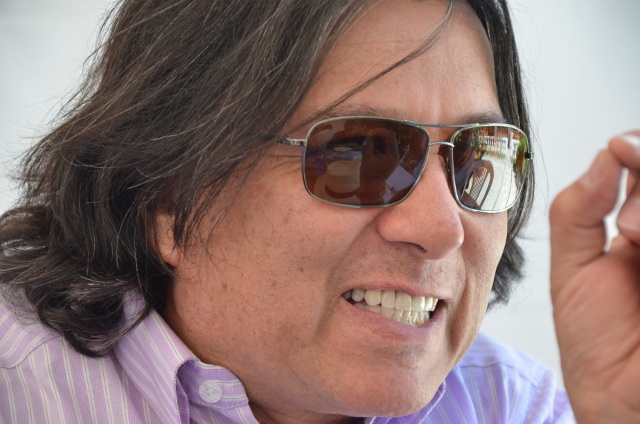
Shortly before I entered the university, a very special experience was instrumental in my accepting the Christian faith. Since that time, I’ve been actively involved in a church that has tried to reach poor communities through nutrition, health and education, and I’ve participated in medical caravans in very remote and needy places. The experience of serving the community has definitely made an impact on my life and my vocation.

Dr. Eduardo Campaña

Dr. Eduardo Campaña

Although I specialized in general surgery, I felt called to work in other areas of health. I began to get training in such areas as educational psychodrama, group management and adult education, and I studied and developed a number of subjects related to emergencies, crisis intervention, integrated health care, HIV, sexuality and domestic violence. I’ve facilitated hundreds of training workshops in different countries in Latin America, and I’ve produced educational material that has been widely circulated.

I have two sons and a daughter. I’m married for the second time to a woman with whom I completely share my faith, vision and commitment to work.

I consider it an important achievement having been able to speak in churches about such issues as sexuality or violence that were never discussed in the past.

Dr. Campaña, in these more than 30 years that you have practiced medicine, what still stirs you so deeply that you’d not give it up under any circumstance?

More than medicine, I’d say its health because that’s a broader concept. The field of medicine is one aspect of health.

What inspires my vocation is that I firmly believe in people and in their capacity to learn and change independently of their religion, culture, sex, ethnic group, education or social class, and this conviction is what challenges and inspires me. I feel privileged to know I can be an instrument of change in the lives of persons and communities.

One thing I could never stop doing is interacting with groups and facilitating opportunities for learning and empowerment in churches and communities.

Thinking back about when you started out in your vocation until now, what do you think about the technological, the scientific and specifically the medical progress that has taken place in recent years?

In these 30 years or so, technology has undergone a vertiginous development in every field. Scientific advances in health make it possible to make more precise diagnoses and more effective treatments, and this has had a qualitative as well as a quantitative influence on health services. Nevertheless, I think there are two aspects we should talk about. One is that technological advancements are not available to every person. Health-related technology often serves capital but isn’t at the service of human beings. The other aspect is how the doctor-patient relationship has been lost. Now we are more related to machines than to persons.

Technological advances in general and very especially in the area of medicine have undoubtedly contributed in a positive way. However, it’s also undeniable and evident that hand in hand with technology, cases of medical malpractice are on the rise. Is it due to mediocrity or indifference? Why do you think this is happening?

It’s important to start with the premise that health is a fundamental human right. However, medicine has become a commodity, a source of financial gain and a business. So new technologies are at the service of profit and not of people. Pharmaceutical companies are constantly developing better medicine, but they can make it available only for people who have a certain level of purchasing power and their medicine is not accessible for most people. The medical vocation is part of this dynamic. A person asks, “Why should I study medicine?” And the answer is, “Being a doctor will give me status, money and social position. It will give me power and practically turn me into a ‘semi-god.’”

I think medical malpractice has to do with doctors not understanding their limitations, with their academic training and experience and also because of an uncontrollable desire to make money. A doctor may say, “Although I’m not prepared or trained to resolve a certain type of pathology, I can’t miss this opportunity to make some money.” That’s how many mistakes are made. I think the basis for best practices is to be aware of one’s limitations and capacities and be committed to service.

It also depends on other factors that have to do with infrastructure and the training of people involved in health services. However, a doctor also needs to work with people and health institutions that guarantee responsible services and offer the quality and care all people deserve.

Humanly speaking, what does “his life is in the hands of the doctors” mean? Isn’t that what many would people say?

We need to educate people to understand that it’s the person who is healed and the doctor is there to help, orient or guide towards that healing. A life is not just in the hands of the doctor; it’s also the responsibility of every person to fulfill all the indications and treatments and to take care of his or her own health. This expression could be applied correctly in cases of emergency when experience, expertise and knowledge could make a difference in a person’s life. I think being conscientious is still the best parameter for being a good doctor.

For doctors, their field of work is health and life itself. For other professionals, their areas of focus are different, so cases of malpractice can be different for different areas. Based on your experience, what practical advice would you give present and future colleagues or young professionals and new generations who will soon be inserted into these different fields so they won’t be part of mediocrity and indifference?

I think one of the most important aspects is academic training. Today it gives me great satisfaction to see that more is being required of people who want to study medicine, precisely because of the responsibility implied in this field of work. If people are better trained and prepared, they will be less likely to make mistakes.

On the other hand, as I said before, if the main goal of the medical profession is fame and fortune, then we are at the mercy of a loss of consciousness that could cause us to make mistakes and be negligent. When economic profit is more important than people, we become vulnerable and take risks.

Dr. Campaña, we know you profess the Christian faith. How has Jesus Christ, the God of Excellence inspired you to serve your community passionately through your profession?

Well, the figure of Jesus Christ is the model I admire and try to follow on a daily basis in order to serve passionately, lovingly and disinterestedly, always trying to give my best. Another important aspect is to never stop learning. Renewing the mind and understanding is what changes our attitudes and consequently, our lives.

I feel called to work for the building of the “abundant life” that Jesus came to bring us. I understand “abundant life” as the dignified life all of us have the right to because we were created in the image and likeness of God.

Finally, can Jesus Christ –the God of Excellence- guarantee His followers a life of excellence? What is needed for that?

I understand excellence as the passionate practice based on awareness of the meaning of unconditional love that Jesus calls us to experience and put into practice.

I think the promises and the call Jesus presents in His Word are the guarantee of excellence. I believe there’s a difference between believing “in God” and “believing God.” Believing and claiming God’s promises is what makes the difference.

Excellence is obtained through a continual learning process, through daily work and practice –it doesn’t happen overnight. Learning from mistakes is fundamental for achieving excellence. Another important aspect is the constant evaluation of our attitudes. Everything we do in our lives should be evaluated. We can always improve the way we do things, and we can accomplish that by looking at ourselves and looking at the things we do.  That will allow us to achieve excellence, and for me, that is wisdom.

Dr. Campaña, Facilitador en temas de salud

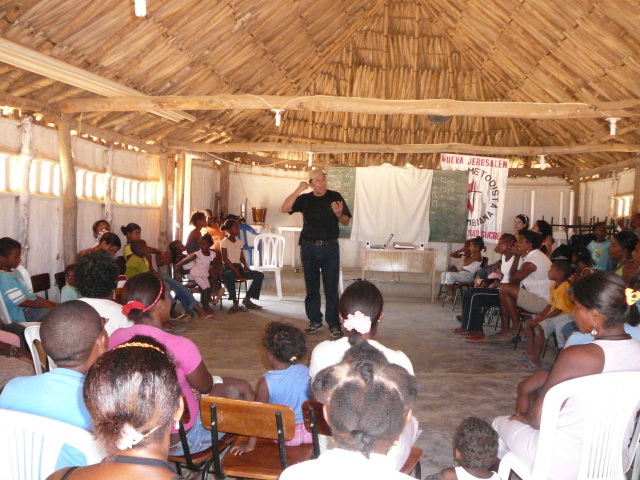
Dr. Campaña facilitating a Holistic Health Workshop in Brisas del Mar, Colombia