
Introduction to the Series
“Death and life are in the power of the tongue, and those who love it will eat its fruit.” (Proverbs 18:21, NASB)
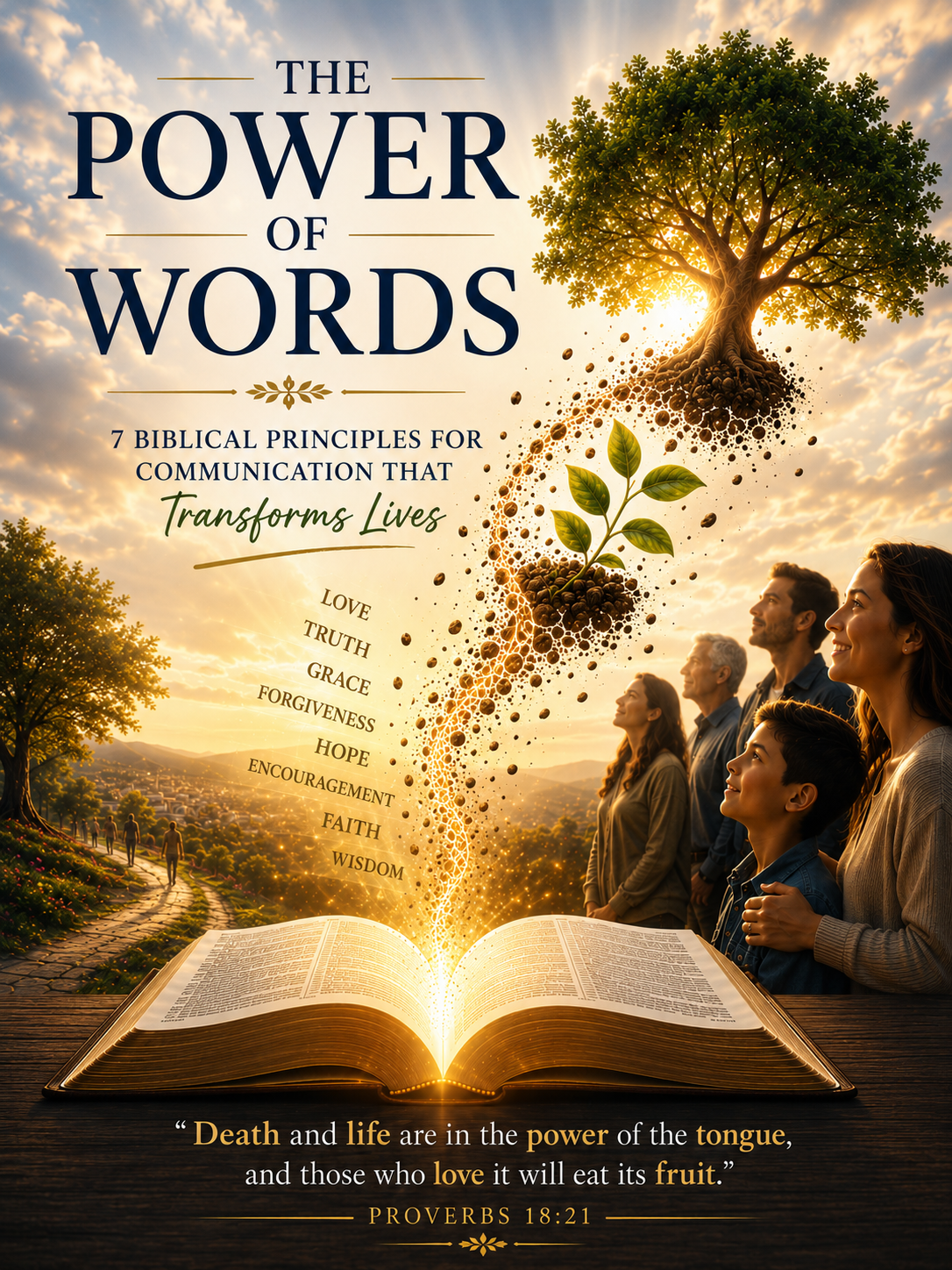
Every day, we speak hundreds, perhaps thousands, of words. Some are forgotten almost as soon as they leave our lips; others remain etched in the minds and hearts of those who hear them for years, even for a lifetime. A single word can restore hope to someone standing on the edge of discouragement. A word can strengthen a marriage, restore the relationship between parents and children, reconcile a friendship, inspire a team, or draw a soul closer to God. Yet a word can also wound, humiliate, divide, and destroy. The question is not whether our words have power; the question is what we are doing with that power.
From the very first pages of Scripture, we encounter an extraordinary truth: God created the universe through His Word. “Then God said…” is a phrase repeated throughout Genesis. Light appeared, the heavens were established, and life emerged because God spoke. The Word was the instrument of creation in the hands of the Creator. If we have been made in His image and likeness, should we not carefully reflect on the way we use our own words?
Jesus taught a profoundly convicting truth when He said: “For his mouth speaks from that which fills his heart” (Luke 6:45, NASB). Our words are not accidents or mere sounds. They are windows that reveal the condition of our hearts. What we say about others, about ourselves, about our circumstances, and even about God exposes our beliefs, our wounds, our priorities, and our spiritual condition. To examine our words is, in reality, to examine our hearts.
We live in an age where words travel faster than ever before. Research conducted by psychologist Matthias Mehl and his colleagues found that adults spoke approximately 16,000 words per day in the mid-2000s. More recent studies suggest that this number has declined in recent years; nevertheless, it still represents millions of words spoken over the course of a lifetime. Yet today our words are not heard only by those around us. The Digital 2025 Global Overview Report indicates that there are approximately 5.24 billion active social media user identities worldwide, representing 63.9 percent of the global population. Never before in human history have people possessed such an extraordinary ability to communicate, influence, and be heard. However, technology has not solved the problem of the human heart. Criticism, slander, deception, offense, and verbal aggression continue to inflict deep wounds upon families, organizations, churches, and entire societies. Long before the invention of the internet, the Word of God had already warned us about the power of the tongue. Today, more than ever, the words of Proverbs 18:21 remain true: “Death and life are in the power of the tongue.”
As you read these lines, perhaps certain words from your own story come to mind. You may remember words of encouragement that gave you strength to persevere during difficult seasons. Or perhaps you still carry scars left by unjust, hurtful, or discouraging words spoken years ago. Most of us have experienced both realities. That is precisely why we know that words are never neutral; they always leave a mark. A word of affirmation can propel a person toward the fulfillment of their God-given purpose. A word of contempt can remain with them for decades. What we say matters far more than we often realize.
Over the coming months, we will explore seven biblical principles concerning the power of words. Together, we will reflect on how our speech affects relationships, family, leadership, ministry, conflict resolution, and our witness to the world. More than simply gaining knowledge, our goal will be to allow the Word of God to transform the way we speak so that our words increasingly reflect the character of Christ. True transformation does not begin with the lips; it begins with a heart surrendered to God.
Before continuing, I invite you to pause and ask yourself a simple yet profound question: if the people who know me best were asked to describe the effect of my words on their lives, would they say that my words build up or tear down? Do they encourage or discourage? Do they draw others closer to God or push them away? Do people feel strengthened after speaking with me, or do they carry the weight of words that have wounded their hearts? The answer to these questions may become the starting point for deep transformation, for genuine change begins when we allow God’s light to illuminate those areas of our lives that need to be changed.
May this series be more than just another reading experience. May it become an opportunity for the Holy Spirit to examine our hearts, purify our motives, and transform our conversations. After all, the words we speak today may become the seeds of the reality others live tomorrow. May our words increasingly reflect the grace, truth, compassion, and wisdom of the One who is the Word made flesh, our Lord Jesus Christ.
If words reveal the condition of our hearts, they also have the power to transform our relationships. I invite you to join me in our next article, where we will explore why certain words remain in our memories for a lifetime and how God can use our everyday conversations to heal, restore, and build up those He has placed in our path.
Until next time!
Sources:
Words spoken per day (scientific source):
https://pmc.ncbi.nlm.nih.gov/articles/PMC11825285/
Social media users worldwide (Digital 2025):
https://datareportal.com/reports/digital-2025-global-overview-report
Tagged: biblical principles, character development, effective communication, emotional intelligence, faith and leadership, healthy relationships, purpose-driven leadership, spiritual growth, The power of words, transformational communication


 Cecilia (Cecy) Yépez was born in Ecuador, South America.

Leave a Reply