Tag Archives: love

THE POWER OF WORDS — Article 3: Words That Shape Families and Generations

Key Scripture: Deuteronomy 6:6–7 (NKJV)

“You shall teach them diligently to your children, and shall talk of them when you sit in your house, when you walk by the way, when you lie down, and when you rise up.”

There are words we hear as children that we can still remember decades later. Some made us feel loved, capable, and secure. Others left wounds that may have taken years to heal. Home is our first school of communication, and the voices of those who love us have an extraordinary influence on how we begin to understand who we are.

That is why the Bible places such great importance on the words spoken within the family. God instructed His people to speak of His truth with their children throughout everyday life: while sitting at home, walking along the way, lying down, and getting up. The purpose was not merely to pass on religious information, but to raise a generation that would know God, remember His works, and learn to live according to His truth.

Words That Affirm Identity

Children need correction, boundaries, and discipline. But they also need to hear words that communicate love, acceptance, and purpose.

“I love you.” “I thank God for your life.” “You can learn from this mistake.” “God has given you gifts and abilities.” “I’m proud of the effort you’ve made.” “I’m here for you.”

These expressions may seem simple, but when spoken consistently over the years, they help create an environment in which children know that their worth does not disappear when they make mistakes.
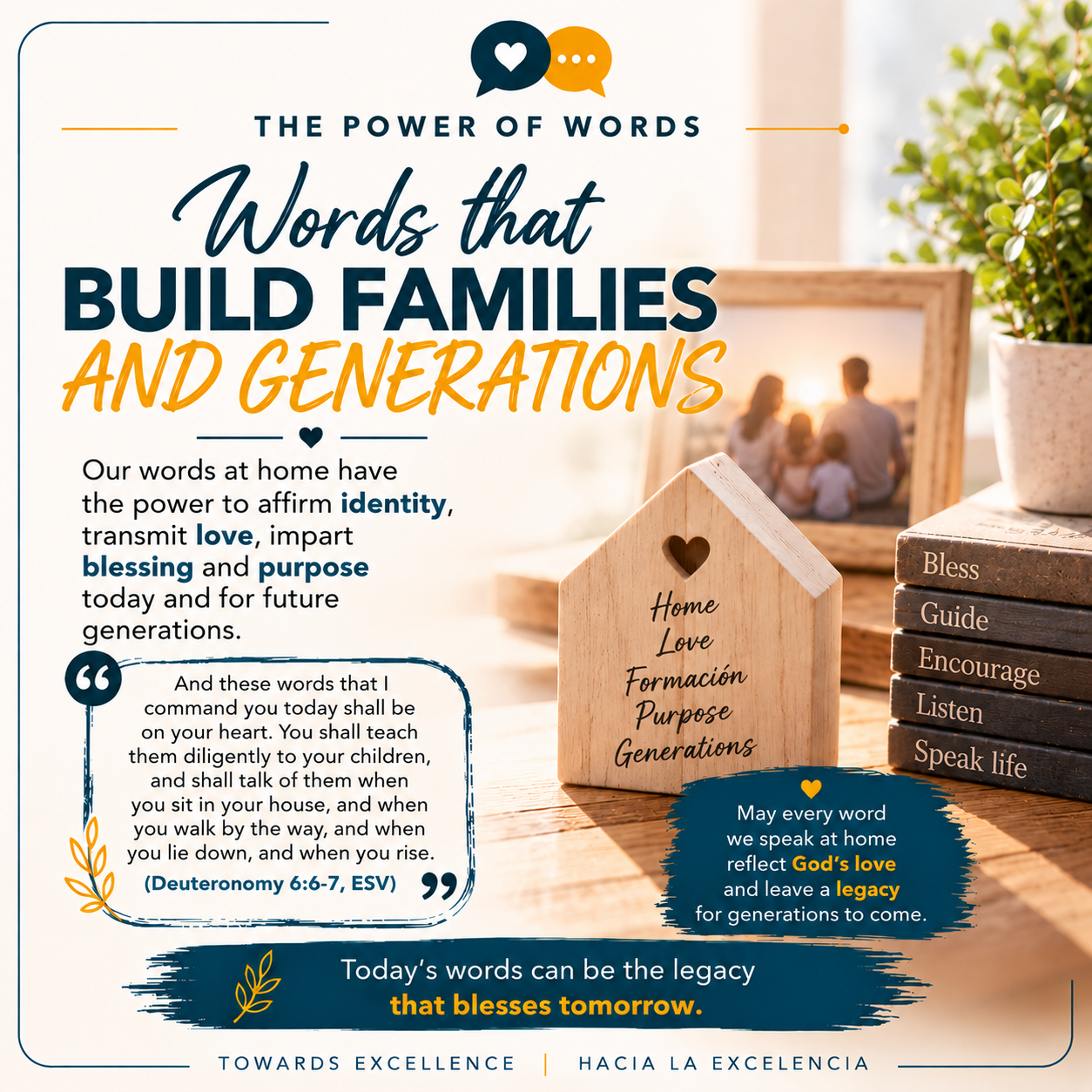
This does not mean feeding an inflated ego or telling our children that everything they do is right. Biblical blessing is not flattery. Love also involves correction. But there is an enormous difference between correcting a behavior and attacking a child’s identity:

“What you did was wrong” is not the same as “You are a failure.”

One statement addresses an action; the other can become a label a child carries for years.

Developmental science also underscores the importance of these interactions. Harvard University’s Center on the Developing Child explains that responsive, attentive relationships—characterized by back-and-forth exchanges between a child and a caring adult—help build important brain connections associated with language, social skills, and emotional well-being. Even before children can speak, naming what they see, do, or feel helps establish connections related to language development.

Blessing a Child Before Birth

Our responsibility to love and affirm a child’s life can begin even before birth.

A mother might place her hands on her belly and say, “My child, you are loved. I thank God for your life. I pray that you will come to know the Lord and fulfill the purposes He has for you.”

This is not about attributing magical power to our words or believing that we can determine a child’s future through our declarations. Power and sovereignty belong to God. Rather, it is about recognizing from the very beginning that this life has value because it was created and is known by Him.

“Before I formed you in the womb I knew you.” — Jeremiah 1:5 (NASB)

“For You formed my inward parts; You wove me in my mother’s womb.” — Psalm 139:13 (NASB)

What a powerful foundation for a family! Before a child can demonstrate any ability, achieve anything, or even speak a single word, that child’s life is already known by God. Their worth does not begin with what they do, but with the One who gave them life.

What Legacy Will Our Words Leave?

Children grow up. One day, they leave home. But many of the words spoken around the dinner table, in the car, at bedtime, or during a crisis stay with them.

That is why it is worth asking ourselves: What voice are we leaving in the hearts of the next generation?

Perhaps some of us grew up without hearing words of affirmation. Maybe we still carry memories of criticism, comparisons, or remarks that made us feel inadequate. But our history does not have to repeat itself. In Christ, we can begin a different legacy.

We can be the generation that learns to say, “I love you,” “I’m sorry,” “I believe in you,” “I’m here for you,” and “Let’s pray together.” A generation that corrects without tearing others down, blesses without flattering, and speaks God’s truth about the identity and purpose of those He has entrusted to our care.

The words we speak today can become part of the spiritual and emotional legacy our children carry into tomorrow.

Personal Reflection

Ask yourself today: What are the people closest to me learning about themselves, about others, and about God through my words?

Let us ask the Lord for wisdom so that our homes may be places where truth is spoken with grace, where correction is given without humiliation, and where each generation learns to use its words to bless the next.

And this principle does not end at our doorstep. Words can also build up—or undermine—teams, businesses, and organizations. In our next article, “Words That Transform the Workplace and Leadership,” we will explore how to correct without humiliating, provide constructive feedback, and foster organizational cultures grounded in respect and trust.

Until next time!

Sources:

1. Center on the Developing Child, Harvard University. “Serve and Return: Back-and-Forth Exchanges.”
https://developingchild.harvard.edu/key-concept/serve-and-return/

2. Center on the Developing Child, Harvard University. “5 Steps for Brain-Building Serve and Return.”
https://developingchild.harvard.edu/resources/briefs/5-steps-for-brain-building-serve-and-return/
The Escape Door for your Soul

“God proved His love on the Cross. When Christ hung, and bled, and died, it was God saying to the world, ‘I love you.’”

Billy Graham

What is the first thing you would think, if you suddenly fell into a dark and gloomy pit, and you do not see a way out of it at all. But suddenly you hear a voice like from heaven, when from above it tells you, “There is only one escape door, I will lead you.”

Salvation1Certainly, in my case, I would pay absolute attention to that miraculous voice that offers me help to find the only escape door, the only way to get out of that pit.

Well, our soul lives in a dark and gloomy pit until it finds “the escape door” – “the exit door” and that only escape door is Jesus Christ. There is no other way, there is no other exit, there is no other escape door – Jesus Christ is the Way, the Truth, and the Life (John 14:6).

Jesus Christ is the only way for the salvation of human being. Jesus Christ is salvation forSalvation2 the soul in depression, for the soul in slavery, for the soul in despair. Jesus Christ is salvation for the soul that longs to get out of the prison of hopelessness.


Referring to Jesus Christ, renowned evangelist and author Billy Graham stated: “God proved His love on the Cross. When Christ hung, and bled, and died, it was God saying to the world, ‘I love you.’”

The everlasting love of the Creator God of heaven and earth, of the universe and of everything in it, is constantly telling the human being “there is only one escape door for your soul, I will lead you.”

Salvation3

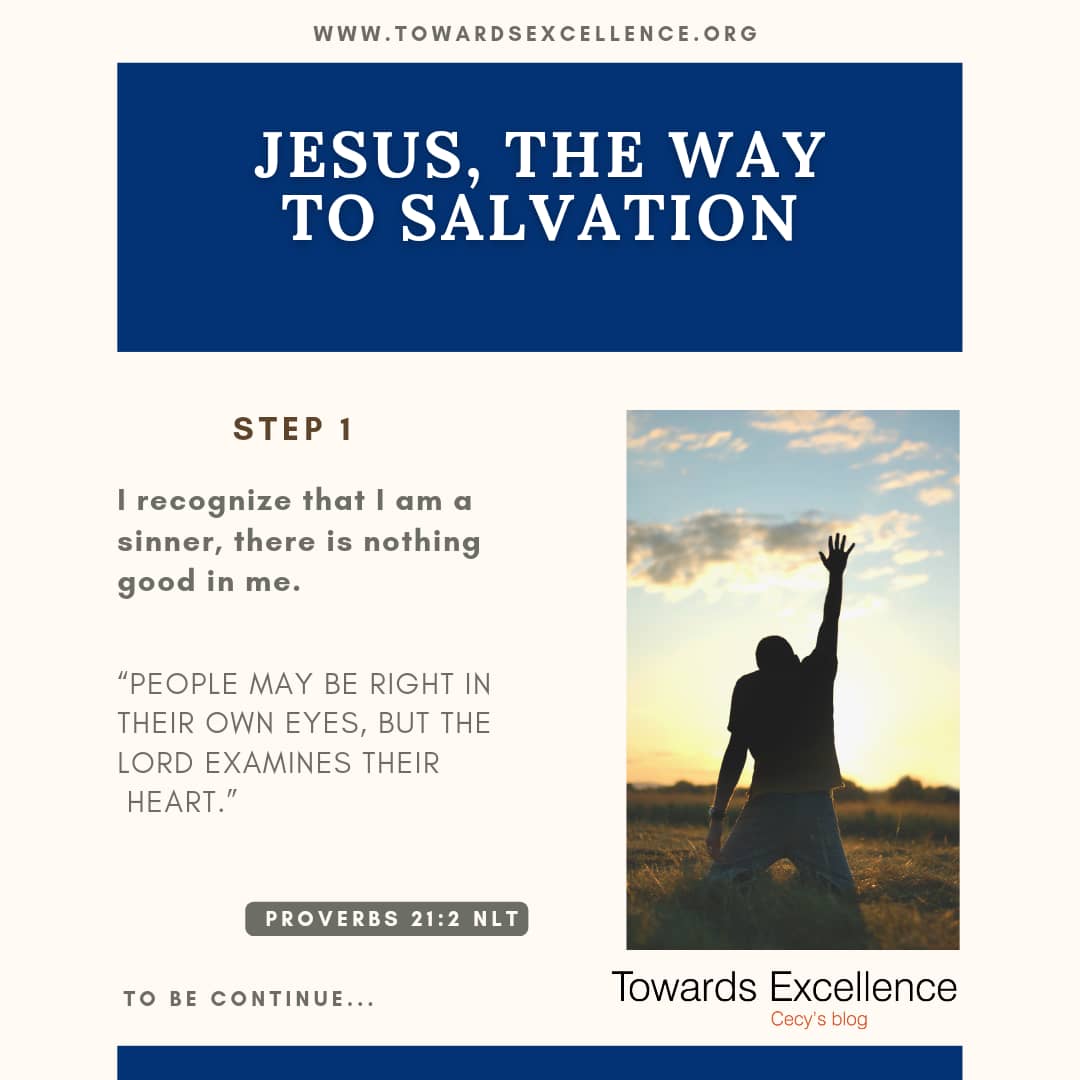
I invite you to walk through the four steps, simple but profoundly significant steps that have been posted in this article (see the images). Pay absolute attention to the voice of God that today will lead you step by step so that you find salvation for your soul.

Salvation4

If you want to know more about salvation through Jesus Christ, do not hesitate to contact us.

May God your Creator speak deeply to your heart and lead you to salvation in Christ Jesus!

With Wings to Fly [Con alas pa´ volar]

“We all have a new opportunity. A healthy family represents a healthy nation.”

Katherine Palma & Fabio Nieves, protagonists

Katherine Palma & Fabio Nieves, protagonists


“Love never fails” is the phrase that identifies the contents of the new Ecuadorian film production “With Wings to Fly” [Con alas pa´ volar].

A dream come true is what the creators of this dramatic comedy genre work feel. After two years of hard work, Executive Producer Byron Liger and Director Alex Jácome along with a select group of producers and actors are now sharing with the Ecuadorian community this feature film, whose main purpose is to reach the heart of families, especially those who are experiencing such critical situations as separation or even divorce and as a consequence, their children are the ones who suffer most.

Current rates of divorce in the world are alarming. Just a few examples are 61% in Spain, 56% in Cuba, 53% in the United States, 27% in Panama, 20% in Ecuador and 36% in South Korea.[1] These rates are troubling and do not even take into account statistics regarding free unions which are also increasing. All of this is a reflection of a broken society and of families in which there is no commitment and where children suffer from a lack of emotional stability.

With the star participation of well-known Ecuadorian artists such as 11-year-old Felipe Centeno, Fabio

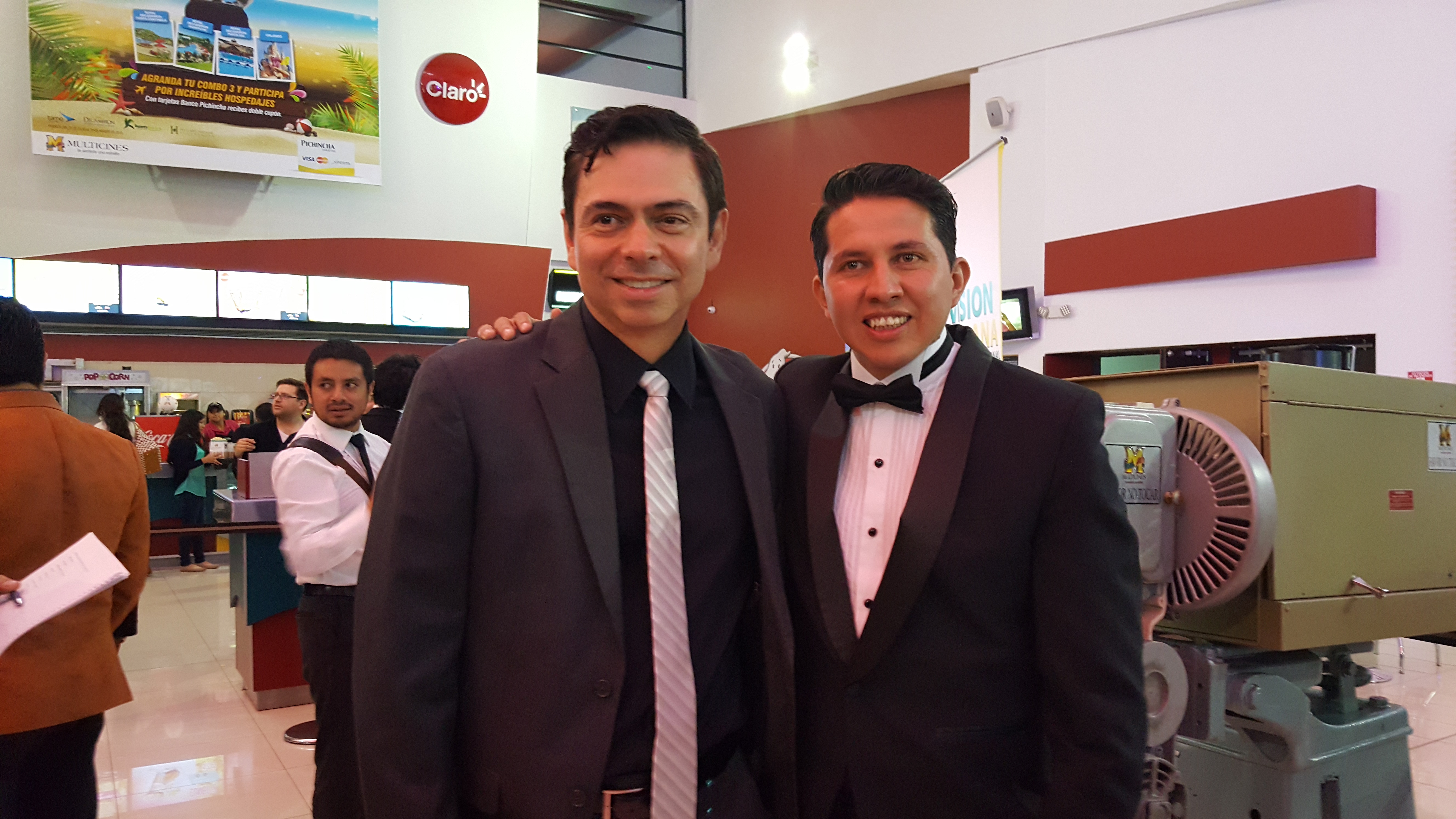
Arturo Allen & Alex Jácome - Premiere in Quito

Arturo Allen & Alex Jácome – Premiere in Quito

Nieves and Katherine Palma, and producer, scriptwriter and Mexican actor Arturo Allen plus a large group of Ecuadorian actors, the storyline of this film develops through the lens of 11-year-old Tito dealing with his parents’ separation. He desperately seeks refuge in his teacher, Mr. González, who does not hesitate to give him opportune advice. Nevertheless, in the imagination of this small boy, and as Arturo Allen who plays the part of Mr. González says, “He begins to twist what the teacher tells him and he starts getting crazy and mischievous ideas in order to try to keep his parents together.”

Amidst laughter, tears and suspense, the message of this film basically highlights three marvelous non-negotiable principles: love is not a feeling, it is necessary to forgive and know that God can restore a person, and especially that He can restore families. In Byron Liger’s view: “We all have a new opportunity. A healthy family represents a healthy nation.”

FB_IMG_1471480717003


“With Wings to Fly” [Con alas pa´ volar] will be released in Ecuador on August 19 nationwide. There is much expectation within the country, and that is not all. Its producers have an even greater dream of taking this feature film to the big screen of Latin American theaters and beyond. This is a film that entertains and will make you laugh and cry all at the same time, but most importantly, it is a film whose message will penetrate your heart no matter what your marital state is. “With Wings to Fly” [Con alas pa´ volar] is full of inspiration, hope and a promise of transformation.


Sources:

[1] http://records.com/countries-with-the-highest-divorce-rates

[1] https://en.wikipedia.org/wiki/Divorce_demography

Peace and Adversity, Beauty and Pain…just in one place?

“If there is a loving God who created us, then he ought to be distraught at the state of the world.”

                                                                                         Amber Van Schooneveld

Amber Van Schooneveld, writer

Amber Van Schooneveld, writer


Amber is the senior writer and editor for Compassion Canada. Before, she worked for Compassion International, as editorial manager of writers and photographers in the field. Amber has always had a sensitive heart to the suffering in the world. When she was a child, she would cry when other children would kill ants. Since then, she has moved on to be moved by greater suffering in the world. Amber is the author of Hope Lives and Passport to Prayer, both aimed at helping people know God’s heart for the suffering in this world and to take action. She has a degree in English from Colorado State University and lives in Colorado with her wonderful family.


Is it possible for peace and adversity, for poverty and wealth, for beauty and pain to fill this world at once?
Sometimes, sitting in my peaceful home in Colorado, enjoying the lovely scenery, having a hearty family meal together and watching my children play with each other, the images you watch in the news of war, disaster and extreme poverty can seem inconceivable. How is it that I, even with all of life’s pains, disappointments and inconveniences, can live in such security when so many others, Syrian war refugees, for example, live in such fear and deprivation? It boggles the mind.

Yet we all know that this is indeed the state of the world. But none of our experiences are all good or all bad. Even in my secure and peaceful life, I’m not sheltered from the pain of cancer or suicide. And those living in extreme poverty also can still have the joy of family and the beauty of God’s creation. All, or at least, most of us experience both great beauty and love and heartbreaking pain and loss.


In your several journeys throughout developed and developing countries, what has caught your attention in regards to this phenomenon?
Returning home to the US after traveling to a developing country, I’m almost always struck by how

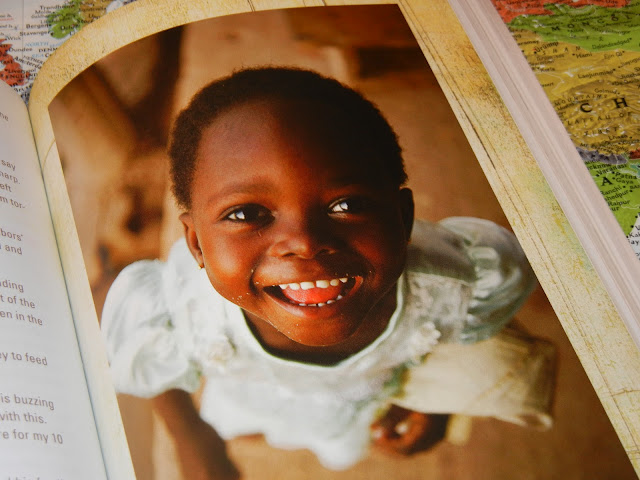
Amber, author of "Hope lives"

Amber, author of “Hope lives”

people don’t realize how good we have it. Living in a relatively affluent place, it’s easy to look around at those wealthier than you and believe that you are just barely making it. Few of us have the context to understand the luxury we live in because we aren’t surrounded by the alternative of people who do not have running water, adequate food, safe homes or access to banking, medical care, insurance or social safety nets.

On the other hand, I’m always struck by how similar we all are, no matter what country we are from. People are people. There are significant cultural differences, but I believe at our core we are all far more alike than we are different. We have the same desires, to be loved, to be safe, and to see our children and families thrive.


Is it God’s responsibility (if there is a God) or man’s responsibility for all the tragedies this world is experiencing?

I would say it is both. If there is a loving God who created us, then he ought to be distraught at the state of the world. And the Bible tells us that He is. (For example, In Luke 19, it is recorded that Jesus wept over the suffering that was to come to Jerusalem. And throughout the Old Testament it says that God hears the cry of the oppressed.) So the most challenging question that has ever been asked is, why does a loving God allow so much suffering? It’s not a question I can presume to answer well, and I don’t think it’s one we will fully understand on this side of eternity.

Many Christians have answered the question of suffering by saying that God uses our suffering to strengthen our faith and draw us toward Him. While we know that God uses suffering, both from experience and from passages like Romans 5:3-5, I don’t think this answer is the whole story. It can lead to bad theology, for example, someone asserting that God caused a child to die in order to teach a mother a lesson about faith. For me, the truth that I cling to when staggered by the suffering in the world is that God created a world in which there is free will because He wanted to create a world of loving relationships. For love to exist, free will is necessary, meaning man is free to do both good or evil. God says He has a plan to redeem the evil that is perpetrated in this world, but just like a tapestry that is beautiful on one side and tangled on the other, it is hard to see the sense of so much suffering in our limited perspective.

But throughout the Bible, God says that we are also responsible to answer to the suffering in the world. He calls us to speak out for justice, to break the chains of the oppressed and to help those in poverty. Although we don’t understand why suffering is allowed, we do know that God calls us to be active in stamping it out of this world. In fact, in Ephesians 2:10, Paul says that God has prepared good works for us to do in advance! What a huge honor that God values us so much as to allow us to be His hands in actively bringing peace, justice and equality to the world.


As surely we cannot close our eyes and say that this world is a “paradise,” is there any hope?

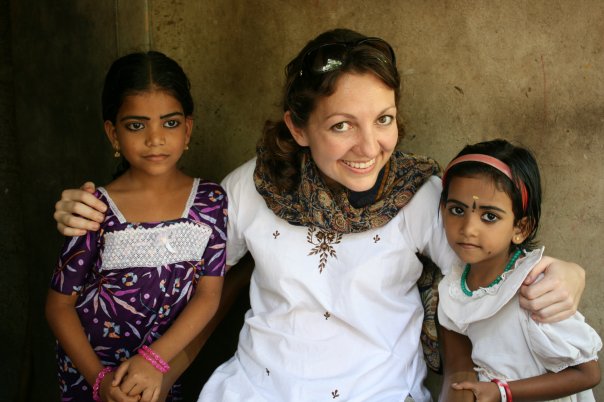
Amber, in one of her trips, sharing with two little Indian girls

Amber, in one of her trips, sharing with two little Indian girls

Though we can’t fully understand why God allows so much suffering, I often think back to Genesis 16, in which God noticed the suffering of Hagar, a servant. When she was dying in the desert, God saw her need and helped her, which led her to call Him “the God who sees.” In the midst of our suffering, we are never alone. God says He is close to the broken hearted. He sees the pain of the world, He listens to the cries of the oppressed, and He calls all of us to be active in being His hands in offering comfort, succor, love and physical help to this world.